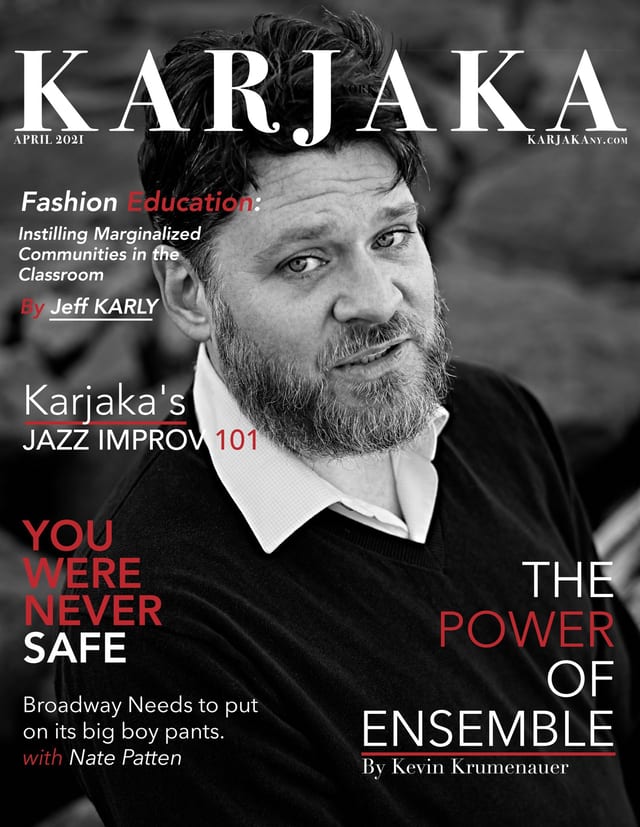
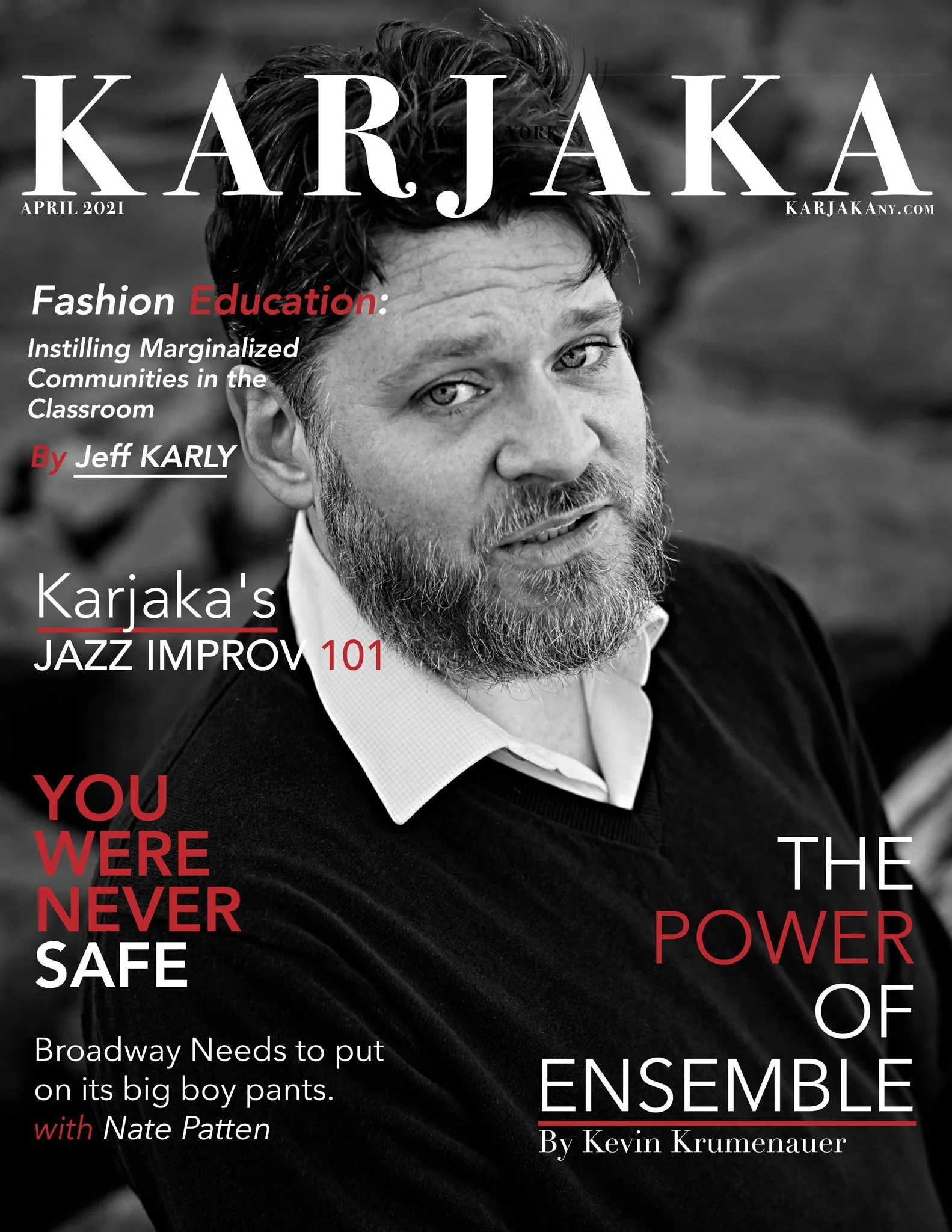
Issue 65 - The Power of Ensemble

04/01/2021

From This Issue

Letter from the Editor: Jazz Improv 101

There's something liberating about Jazz. I am by no means a jazz clarinetist. With advanced studies in classical clarinet, I tend to like the box that is classical music. That being said, Jazz has it's own set of rules. There is a structure in place with guidelines for success in a jazz solo

You Were Never Safe: Broadway needs to put on its big boy pants.

Hello everyone. Shhh…quiet please. I’m writing this from my “Safe Space” and I don’t like a lot of outside noise and I’m already feeling triggered. My “safe space” is a secret, magical, hypothetical place where nobody questions me or my values, uses “problematic language”, or tells me no. Back on earth, the organization Advocates for Youth states on their website that a safe space is “a place where anyone can relax and be fully self-expressed, without fear of being made to feel uncomfortable, unwelcome or challenged.” In short: a place that doesn’t actually exist. In recent years, college students have been welcomed into safe spaces like Hillary Clinton’s welcomed at CNN. But it raises the question:  what actually is safe and, more importantly, what are we safe from?  The ideals of this can’t be qualified, let alone quantified. They’re endless. While the original intent of a safe space probably grew out of a desire to give marginalized communities an opportunity to share their experiences--something I find as an LGBT person both necessary and moving--creating a space where “no one is made to feel uncomfortable” creates a utopian nightmare. In fact, for us to learn about these marginalized people and situations, shouldn't we need to feel some sort of discomfort? No pain no gain, or does fear not exist in this dojo? Here is where the paradox begins.

Fashion Education: Instilling marginalized communities in the classroom.

Do you remember when cabin fever had set in for you last year, and the weight of the world felt so heavy? I do that was June 2020, at least three months into a pandemic, sitting home, witnessing the unnecessary murder of George Floyd. This moment of reckoning sparked one of the largest civil rights movements in recent times. And in that time, I started to see many major companies and brands publicly began putting out messages of solidarity, “We stand with you,” “BLM,” “End systemic racism,” etc. Did you notice that? It was hard not to look at those statements as cap and performative, especially when no real change was happening in the workplace for Black staff or in the classroom for Black students. The industry often uses buzzwords to describe the future, sustainability, authenticity, and currently, its favorite one is inclusivity. But inclusive for who, and where should it begin? Education and the fashion curriculum. However, the industry, which includes fashion schools, continues to perpetuate the eurocentric standard of beauty and design. Black students often find it more challenging to succeed in places where they aren’t heard, seen, or supported. And for many Black children, social inequities and structural barriers beginning early and continue throughout their life. How can education create real long-lasting and provide a space where more students of color can succeed?

The Power of Ensemble

I was a lonely kid. I remember in the early 80s turning the key to my mom's front door and wishing I’d open it to find a house full of people. But it was just me in the afternoons. I had no siblings, my parents were divorced, and my mom worked a corporate job to support us. I spent after school watching cartoons or playing video games alone.