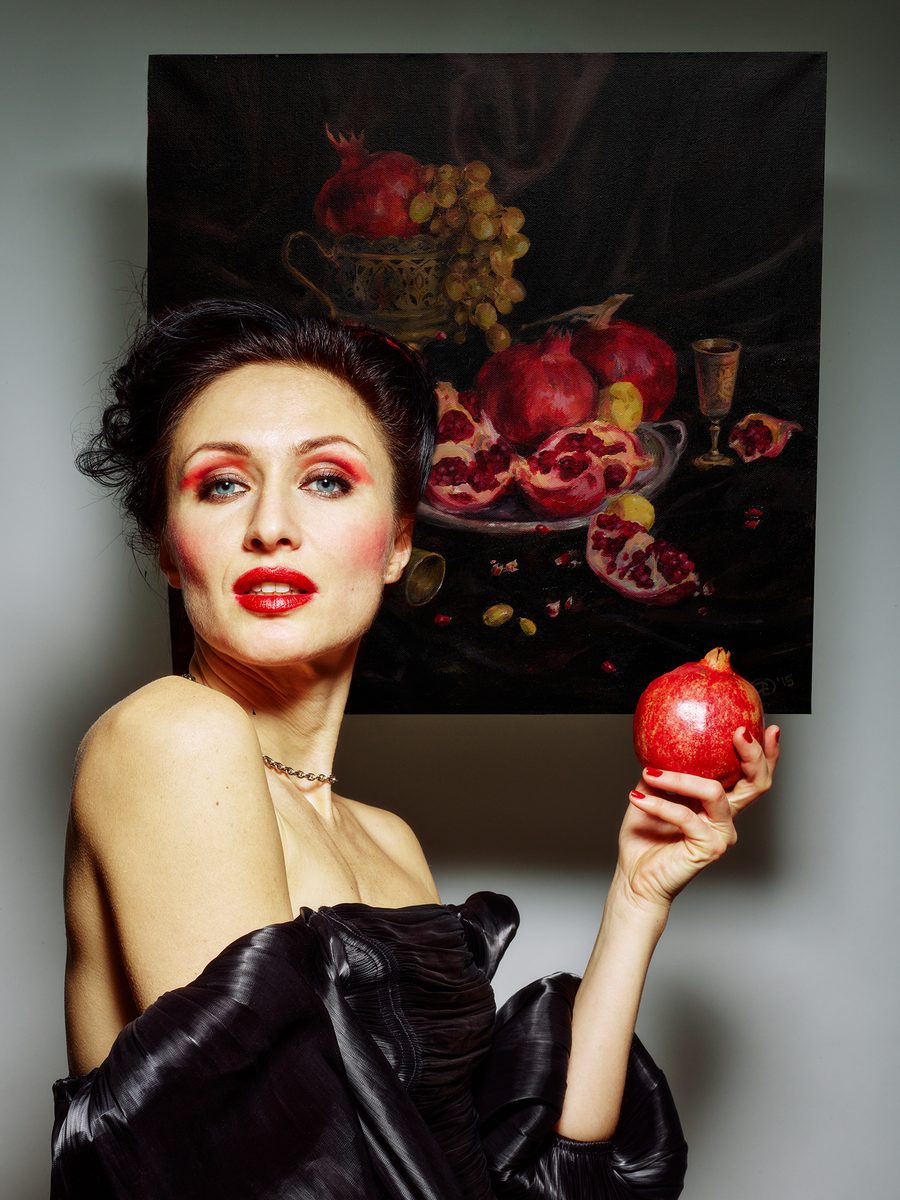
The Color of Pomegranates
It was the brightest time of my life. The temperature was always 72 degrees, the sun was always out, the sunglasses were always on, the commute to the ocean was one and a half songs. Everything around was yellow and blue, white and green, modern and not very sophisticated.
As you might have guessed, I lived in California.
Back in 2016 I lived in San Diego, hated it with all my existence: freshly arrived immigrant with lost self-identification and deep creative crisis, that’s what I was at the moment Aunt Caroline entered my misery and without asking permission claimed herself as my Californian fairytale godmother.
Maybe because she liked me at once, maybe because she was lonely too, or maybe because I had a Persian name.
As a fairytale godmother she had an abundance of fun things she would gift me with, trying to cheer me up from my dark as charcoal depression: old tango shoes so I’d return to dancing tango again, she taught me how to do coffee reading, she invited me to her watercolor Sundays to paint her roses. We would walk around her fruitful garden and talk for hours. The garden was truly remarkable, but its main treasure was something she had nothing to do with: a 40-year-old pomegranate tree. And that tree was damn fruitful.
The sneaky ways she included me in all those cheering activities and made me accept gifts was pure art.
One day she asked me to help her harvest pomegranates. As she was picking them up and putting them in the basket I was assigned to hold, she would talk:
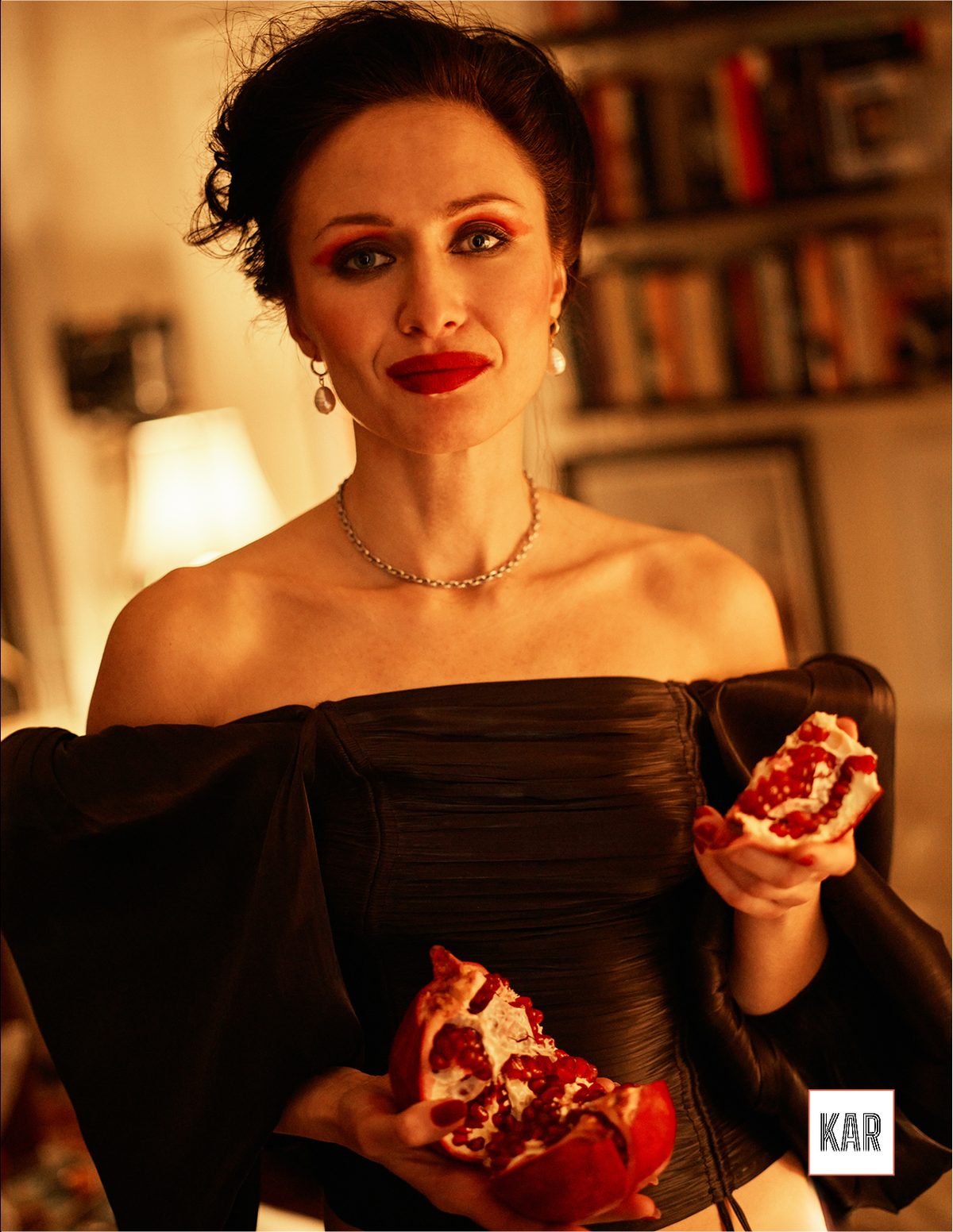
“You know, if the apple in Abrahamic religions has always been associated with temptation, discord, forbidden pleasure and, after all, sin. In opposite, the pomegranate has been sort of an apple’s protagonist in the fruit world: a completely different symbology: it’s about life, love, prosperity, wisdom and beauty.”
I kept nodding enthusiastically, while the basket was quickly gaining weight.
“You see those crows? – Continued Aunt Caroline, – We won’t let them have all of those gifts. Did I tell you I bought this house for this tree? Oh, boy, put the basket down, it’s heavy! Come, I’ll show you my butterfly garden I made last month.”
On my way back home, she came out to the car with me, holding a box. She quickly put it in my trunk and disappeared in the green alley leading to her house.
I opened the box: it was full of pomegranates.

That’s the way she was.
A few days later I received the news that Caroline was leaving and our watercolor Sundays were canceled for a while.
I was devastated to a degree I didn’t expect: that was what was keeping me alive. Even though my watercolors were pale and lifeless as I was myself.
And one day instead of making another glass of pomegranate juice I took my watercolors and three fruits and painted them out of desperation.
It came out alright. But Caroline was happy when I sent her the paintings with a sad note: “I don’t think I’m doing a great job… But I had fun as you said I should.”
“It’s alright, my dear Daria, I’ll send you more pomegranates.”
And so she did.
And I kept doing my lousy job painting them, because this gesture put some sort of obligation on me that I accepted. I said: “I must paint”.
The moments I painted felt like home, but watercolor was bleeding. It made me nervous, and I was seeking peace.
So one day, I took out my husband’s grandmother’s copper set, and, among them, threw all kinds of beautiful things on a table, including the pomegranates.
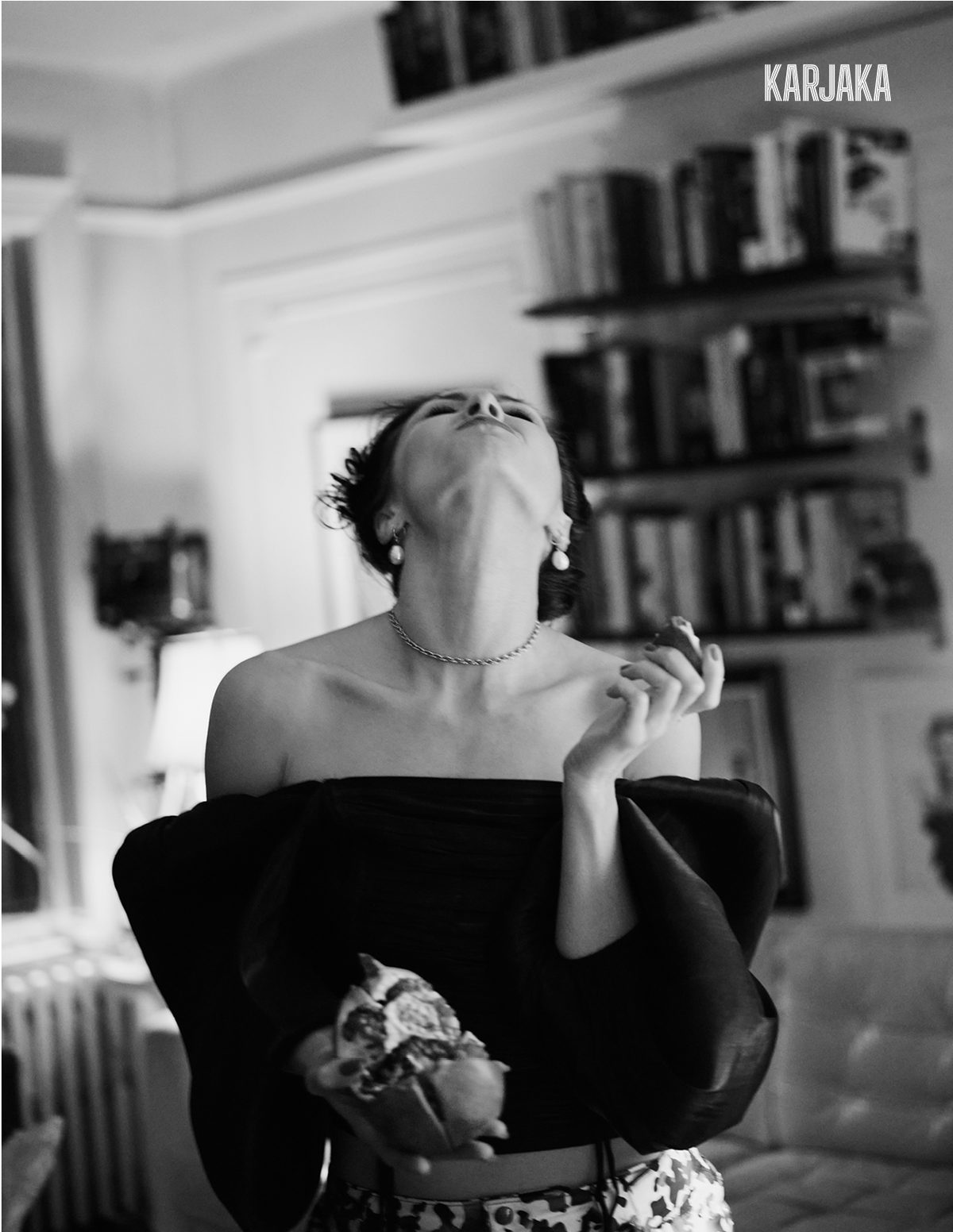
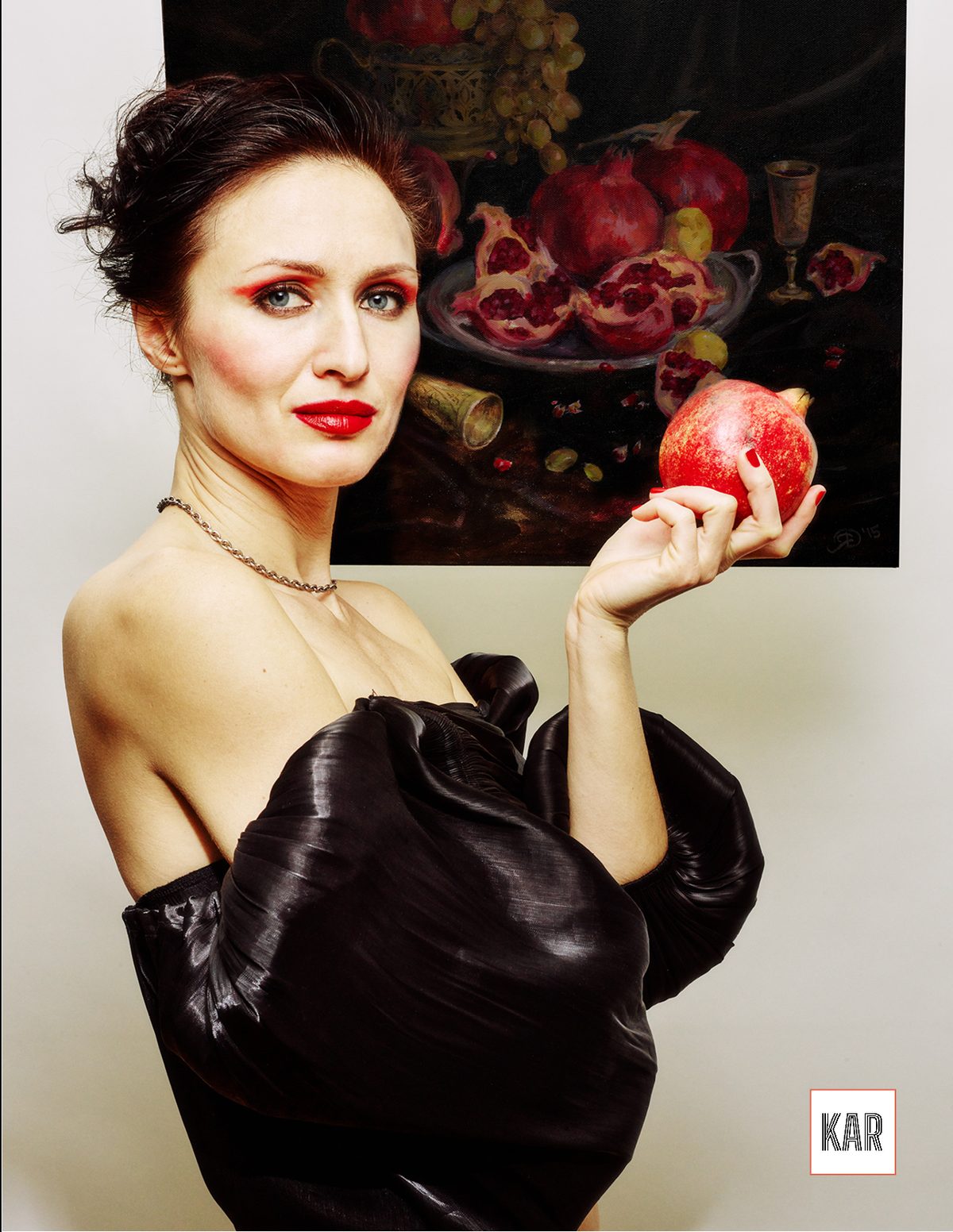
But this time, I took the oils. I think I projected all the things I wanted to have and feel in life into that still life: thick darkness of velvet, its mystery and beauty, the things that have some historical value, and the fullness of the open pomegranate: the feast! The celebration that ends with the rising sun, with music, people, dancing, love and the feel of being home.
A week later I had a painting.
Time passed. I overcame my depression, left California, and began the life of an artist in far worse weather but a far more favorable environment: New York, New York.
It took me seven long years to emerge from that painting in human form, here, in New York City and stand before my very painting and realize this is how we have to be shown.
It was up until last September when I visited Sergei Parajanov’s museum in Yerevan, Armenia: the country with pomegranate as its main symbol. I fell in love with his movies after watching “The Color of Pomegranate”. The museum was created in his house packed with jaw-dropping art that he created when he was banned from cinema. And I thought that the way I imagined myself being reborn from the painting only scratched the surface of what full creative savage rebellion can look like.
Later that very year on my trip to Tbilisi, Georgia I walked on one of the old paved streets, and was telling my guide this story. We scrolled through some of the Parajanov pictures, and one of them was taken somewhere in Tbilisi.
All of a sudden, my guide laughed loudly.
“We just walked 5 feet next to this very spot.” – he said.
And I wanted to believe that our souls had a handshake. And the voice in my head threw a little memory from which it all started:
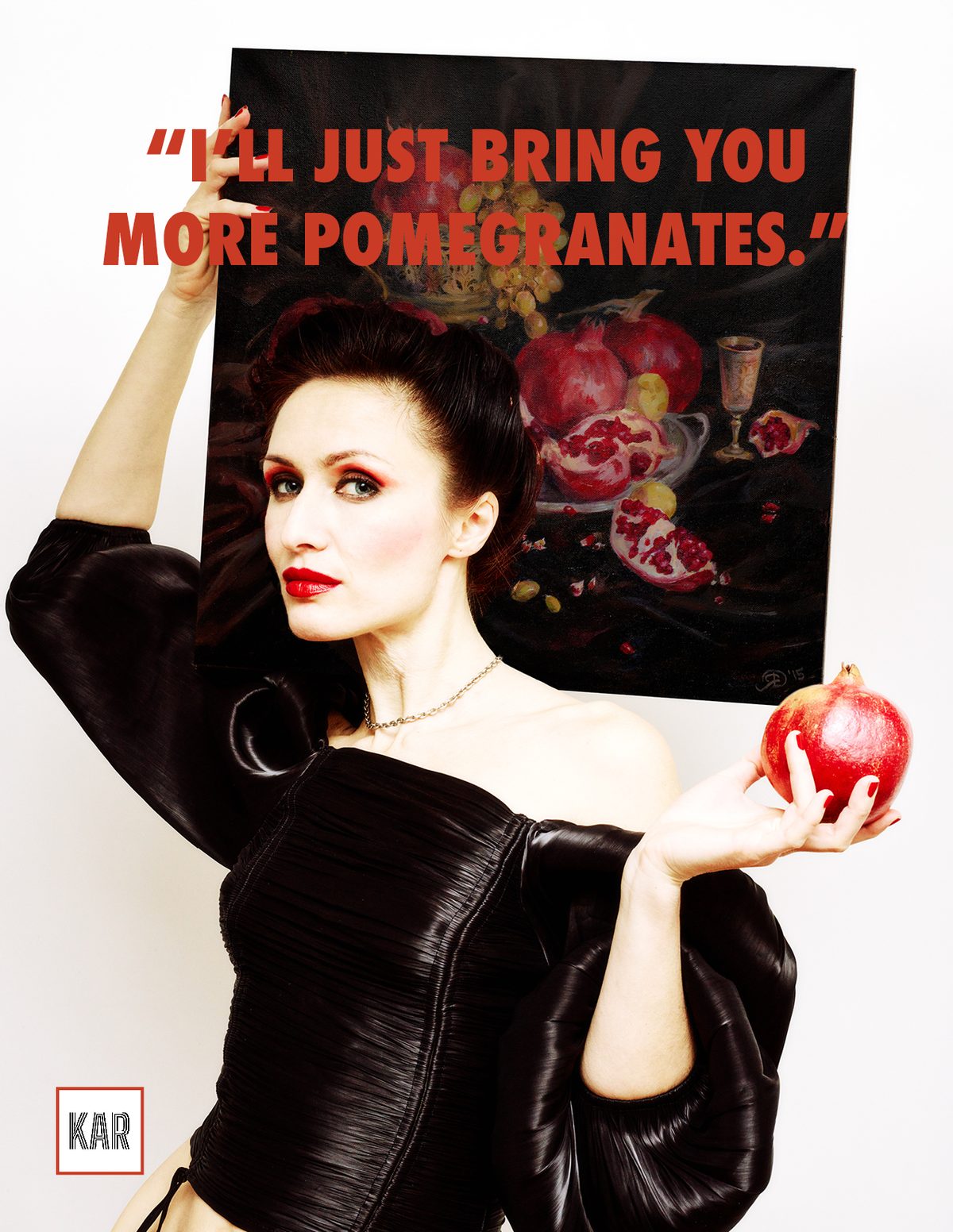

Daria Meyer
Multidisciplinary performer: actress, dancer, singer-songwriter, poet, and immersive experience performer. For me to be an actress means to be a professional human being to begin with. Acting for me means to get into the director’s head and complete his idea. Leaving my ego behind, I enjoy the process of co-creation with others, and the sweet alchemy of creating the world of my female characters, making them alive, making them diverse, complex, and complete. I was classically trained in the Russian Theatre Academy. After playing at the Moscow Art Theatre I continued my journey first in Geneve, Switzerland, then in Los Angeles, and after in New York City, where I reside at this very moment.
All pieces by Daria Meyer →