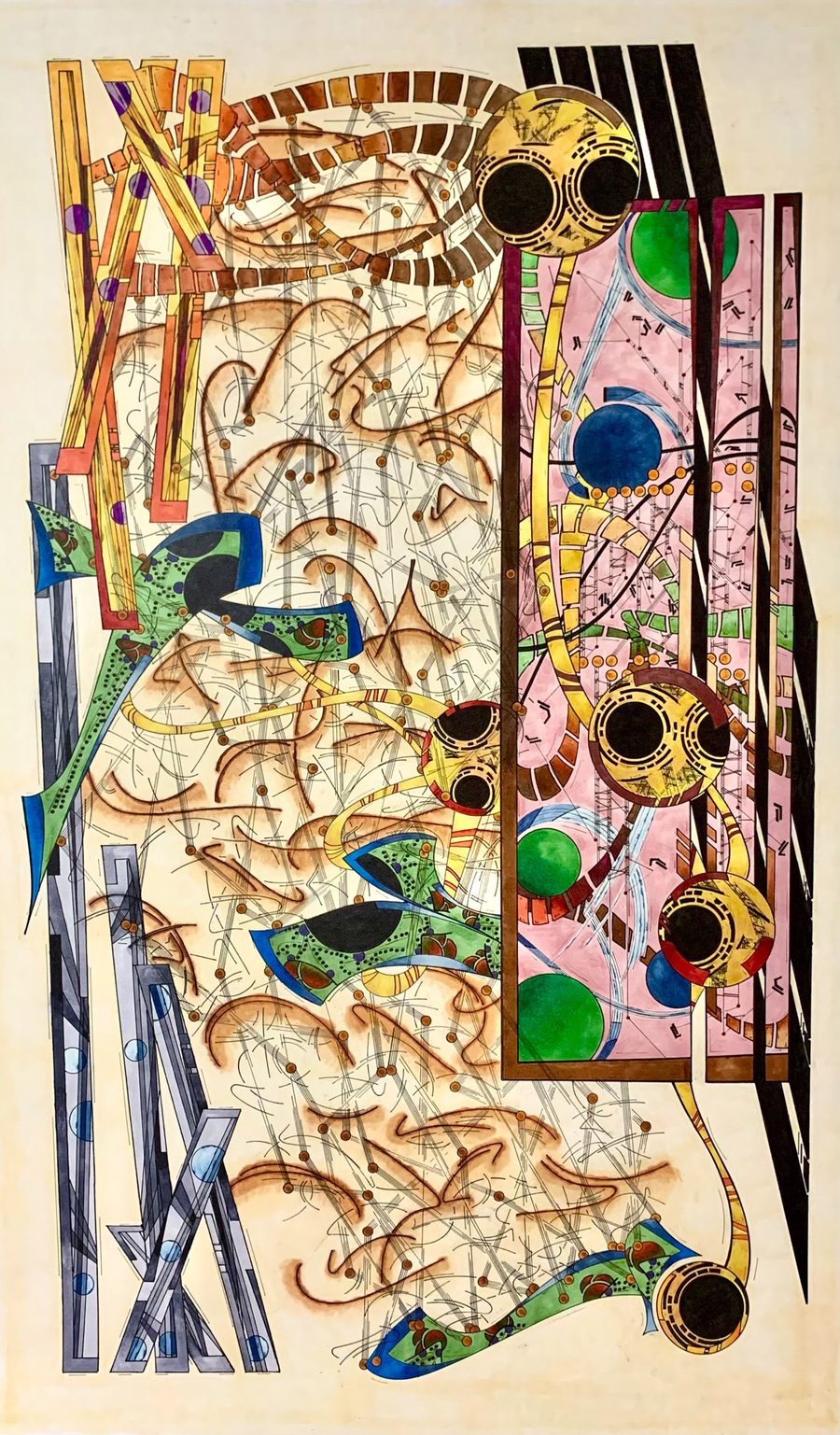
Artist’s Corner – Kevin Baldwin: Composition No. 5
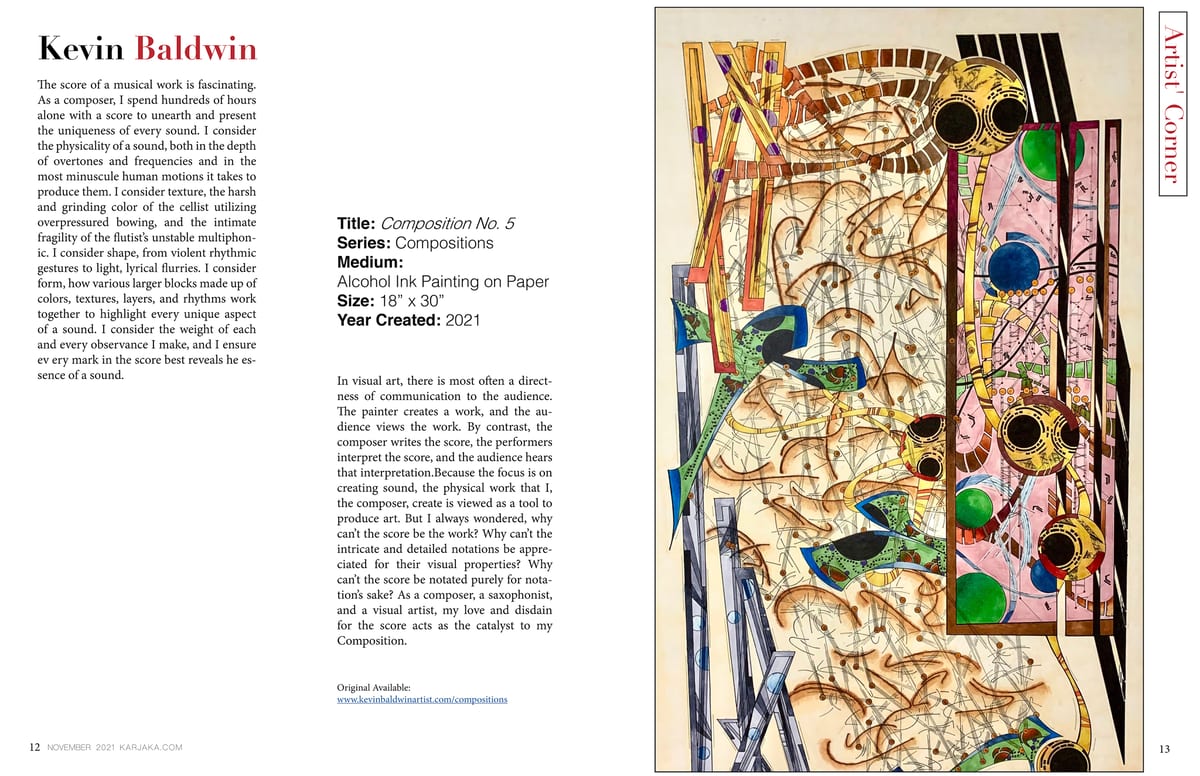
The score of a musical work is fascinating. As a composer, I spend hundreds of hours alone with a score to unearth and present the uniqueness of every sound. I consider the physicality of a sound, both in the depth of overtones and frequencies and in the most mi-nuscule human motions it takes to produce them. I consider texture, the harsh and grinding color of the cellist utilizing over-pressured bowing, and the intimate fragility of the flautist’s unstable multi-phonic. I consider shape, from violent rhythmic gestures to light, lyrical flurries. I consider, how variations larger blocks made up of colors, texutres, layers, and rhythms work together to highlight every unique aspect of a sound. I consider the weight of each and every observance I make, and I ensure every mark in the score best reveals the essence of a sound.

In visual art, there is most often a directness of communication to the audience. The painter creates a work, and the audience views the work. By contrast, the composer writes the score, and the audience hears that interpretation. Because the focus is on creating sound, the physical work that I, the composer, create is viewed as a tool to produce art. but I always wondered, why can’t the score be the work? Why can’t the intricate and detailed notations be appreciated for their visual properties? Why can’t the score be notated purely for notation’s sake? As a composer, a saxophonist, and a visual artist, my love and distain for the score acts as the catalyst to my Composition series.

Check This Out

The Rabbi Painter of Park Slope Celebrates with a Retrospective

In 1994, I studied with an inspirational rabbi in Israel; before long, I was painting fictitious portraits of orthodox rabbis, a stylistic breakthrough for me. The elongated, bearded visage of this rabbi conveyed so much history and so much wisdom. I felt I couldn't do him justice without giving him a mouth. In recent times, I've had a strong need for my peaceful rabbis to confront some serious issues and put their mouths to use by engaging in meaningful dialogue.

Artist’s Corner: Kevin Baldwin

A Musical score requires immense focus and understading. Practicing and bringing the notational language to life changes daily as you uncover new ways of weaving together lines, gestures, and structures. In the Recollection series, I interpret the black acrylic notation using charcoal, metal powders, and acrylic. Each day new possibilities arise, and the charcoal and powders remain malleable; the medium allows alterations in gesture and layers, or even be removed. This process highlights the beauty inside this raw and imperfect process.

Artist’s Corner: Kevin Baldwin

The score of a musical work is fascinating. As a composer, I spend hundreds of hours alone with a score to unearth and present the uniqueness of every sound. I consider the physicality of a sound, both in the depth of overtones and frequencies and in the most mi-nuscule human motions it takes to produce them. I consider texture, the harsh and grinding color of the cellist utilizing over-pressured bowing, and the intimate fragility of the flautist's unstable multi-phonic. I consider shape, from violent rhythmic gestures to light, lyrical flurries. I consider, how variations larger blocks made up of colors, texutres, layers, and rhythms work together to highlight every unique aspect of a sound. I consider the weight of each and every observance I make, and I ensure every mark in the score best reveals the essence of a sound.

All Categories

LEAVE A REPLY

Please enter your comment!
Please enter your name here