
Seasonal Affective Disorder: A Survival Guide
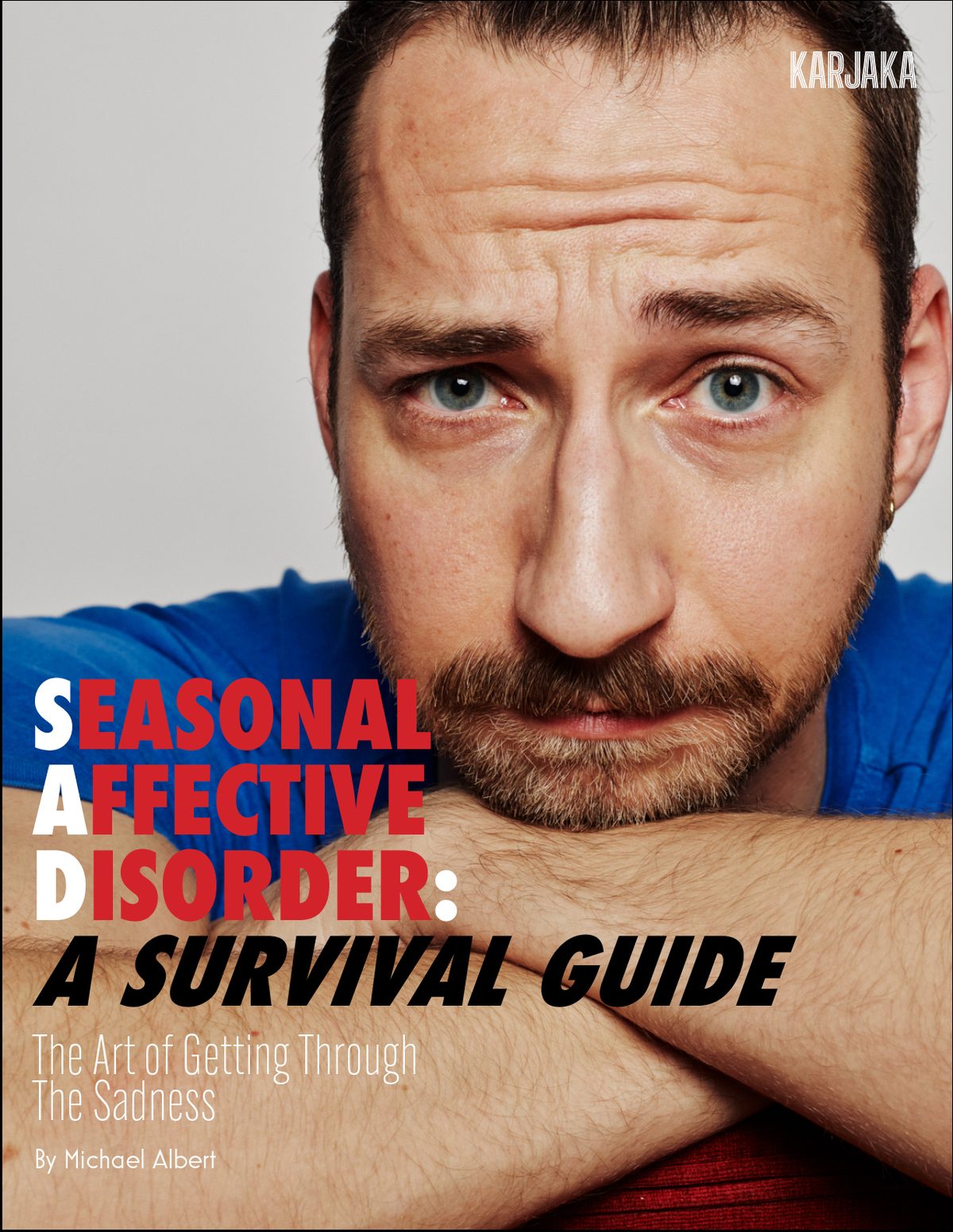
The Art of Getting Through The Sadness
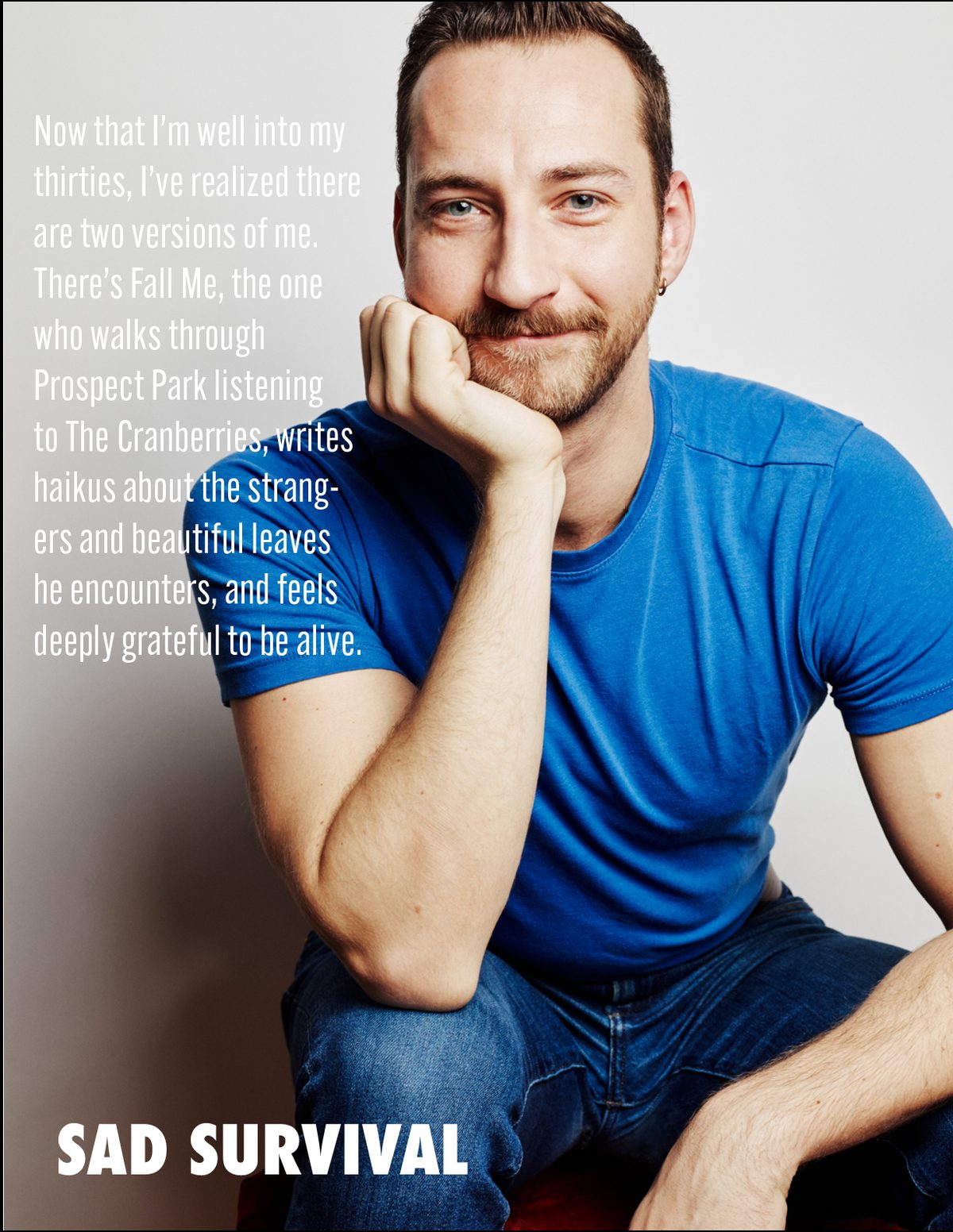
Luckily I can usually stretch this version of myself through the holidays by swapping The Cranberries out for Wrapped in Red, and my lumberjack flannels for my Christmas Hidden Valley Ranch Dressing sweater and a steady rotation of holiday brooches. But then there’s Deep-Winter Me, the one who is irritated by the sound of people simply existing indoors, feels personally attacked by a delayed train, and is one sad song away from calling it a day at 4:48 p.m. Enter: Seasonal Affective Disorder.

Seasonal Affective Disorder is unfortunately abbreviated as SAD, which feels so unnecessary. It’s what happens every winter when the sun disappears. Your motivation follows it, and suddenly even small tasks like changing your bed sheets feel aspirational. The important thing to know is that SAD isn’t just a personality flaw, a weakness, or a failure of gratitude. It’s science. Real, peer-reviewed, lab-coat science. When daylight decreases, your circadian rhythm—the internal clock that tells your brain when to wake up, sleep, and feel joy—gets thrown off. Less sunlight means less serotonin (the “everything is fine” chemical) and more melatonin (the “cancel plans, lower expectations, and go horizontal” chemical). In short: your brain is doing winter exactly as designed, unfortunately without checking your schedule or emotional availability first. But before you resign yourself to accepting low-grade despair and feeling like a half-deflated balloon for three months, I’m going to lay out some helpful tools that are equal parts research and non-peer-reviewed entertainment masquerading as solutions.
Since all of us here believe in science (Right? Just checking), let’s talk Vitamin D. It’s one of the few things your body makes because of the sun. When sunlight hits your skin, it triggers a process that helps produce Vitamin D, which plays a role in everything from bone health to immune function to, crucially, mood regulation. The problem is that in winter, the sun clocks out early, shows up late, and spends most of its shift hiding behind clouds and tall buildings. Fewer daylight hours mean less sun exposure, which means many of us are walking around quietly deficient without realizing it. This explains why you mouthed “Unbelievable” when the Trader Joe’s line wrapped through frozen foods, despite knowing this is always the price of entry. Low Vitamin D levels have been linked to depression, fatigue, and the vague but persistent feeling that life is happening to you instead of with you. In short, Vitamin D is essentially bottled daylight, which we can all take every morning as a small nod to the version of ourselves who used to wake up happy for no reason. Is it a cure-all? No. Does it help? Yes. Is it humbling to realize your seasonal despair might partially be solved by a $12 bottle from CVS? Deeply.

Then there’s the Happy Lamp. I’m fully aware the Happy Lamp sounds stupid and fake. It sounds like something Gwyneth Paltrow would sell you for $400 and imply your sadness is a mindset issue, and yet, against all odds, it actually works. Light therapy lamps are designed to mimic natural sunlight, specifically the bright early-day light that helps regulate your circadian rhythm. When your brain gets that signal first thing in the morning, it knows what time it is, what chemicals it should release, and most importantly that it does not need to spiral before noon. Used consistently, a Happy Lamp can help reduce melatonin production during the day while encouraging serotonin, helping to enhance mood, focus, and the fragile sense that maybe, just maybe, today isn’t a total wash. I sit in front of mine every morning like a houseplant that’s been rotated toward the window: upright, compliant, and hoping for the best. I won’t lie, sometimes it makes me feel like I’m in an episode of Black Mirror—but if winter insists on depriving us of real sunlight, I see no shame in tricking my brain with a well-lit lie.
Now, these biological approaches are very helpful, but on their own, they’re not always enough to undo the season’s subtle character assassination. Winter isn’t just a biological event; it’s a psychological endurance sport. Which is why we have to give ourselves things to look forward to, and aggressively. Planning a trip, a dinner, a concert, or even a really good soup-night can actually change your brain chemistry. Anticipation boosts dopamine and serotonin, meaning your brain starts feeling better before the thing even happens. This is where my corny-ass personality comes in. If you know me, you know I love finding reasons to celebrate. This past summer, a group of Gen Z gays told me that the way I earnestly and fully commit to every holiday gives off “major camp counselor vibes.” While it briefly made me want to hurt their feelings, they’re not wrong. Do I construct an annual advent-style calendar for October with daily tasks like “Whisper a secret to the wind,” and forward it to 200 friends to get everyone in the Halloween spirit? Yes, I do. Did I spend $100 on leg warmers, a body suit, and a dance belt to dress up as Jane Fonda for seven Pride-themed fitness classes that no one asked for? Duh. If you’re wondering why I’m like this, I have two answers. One: I’m a Midwesterner with a Pisces Sun and Leo Rising. Two: It works. If the world is going to be dark and cold, I’m going to be festive out of spite. Put that on my headstone. My candles are lit, my seasonal playlists are queued, and I will absolutely be making monkey bread for International Women’s Day “just because.” Joy does not need permission.
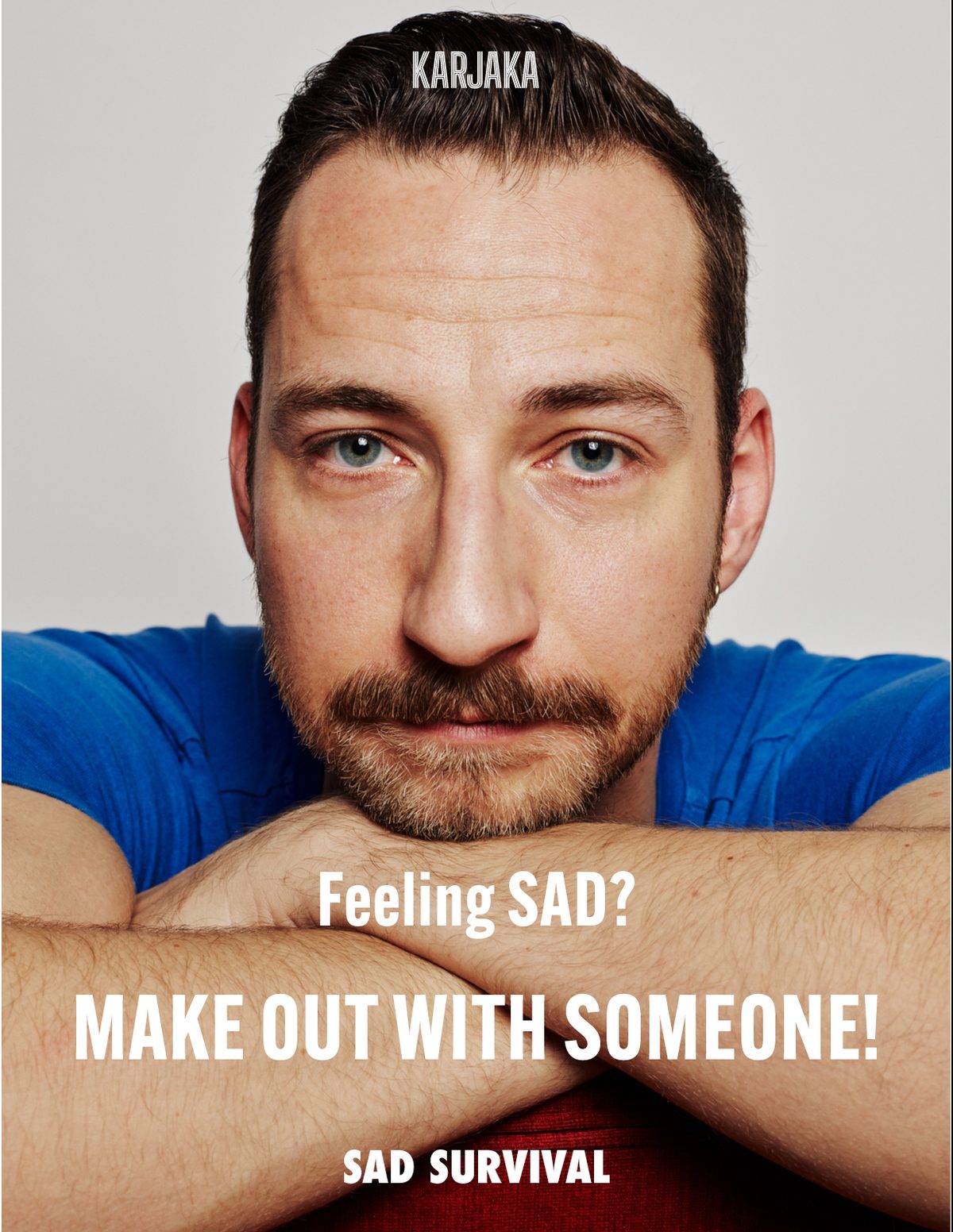
If all of that fails, you can always pull out the big guns: make out with someone. I won’t cite a study for this one, but kissing releases dopamine, oxytocin, and endorphins, all chemicals that tell your nervous system you are safe, desired, and alive. In a perfect world, this would be someone you burn bright for, someone you’d like to take to the Monet exhibit at the Brooklyn Museum and then rip all of their clothes off. If that person is still hiding from you, the good news is this doesn’t need to be someone you’re going to marry. Maybe you’re on the dance floor and you don’t even know their last name, or which diva they’d defend in an argument. Sometimes you just need a reminder that you exist in a body, and you’re not just exclusively living inside your thoughts. Winter is long. Touch helps. If a lip collaboration feels too far away or too vulnerable, I like to move furniture. Changing your physical environment gives your brain novelty, which is another serotonin cheat code. Suddenly, you’re not depressed, you’re interior designing. You’re not spiraling, you’re Marie Kondo refreshing energy and sparking joy. Is it possible that I’ve just pushed my sadness six feet to the left? Sure. But honestly, it looks a little better over there.
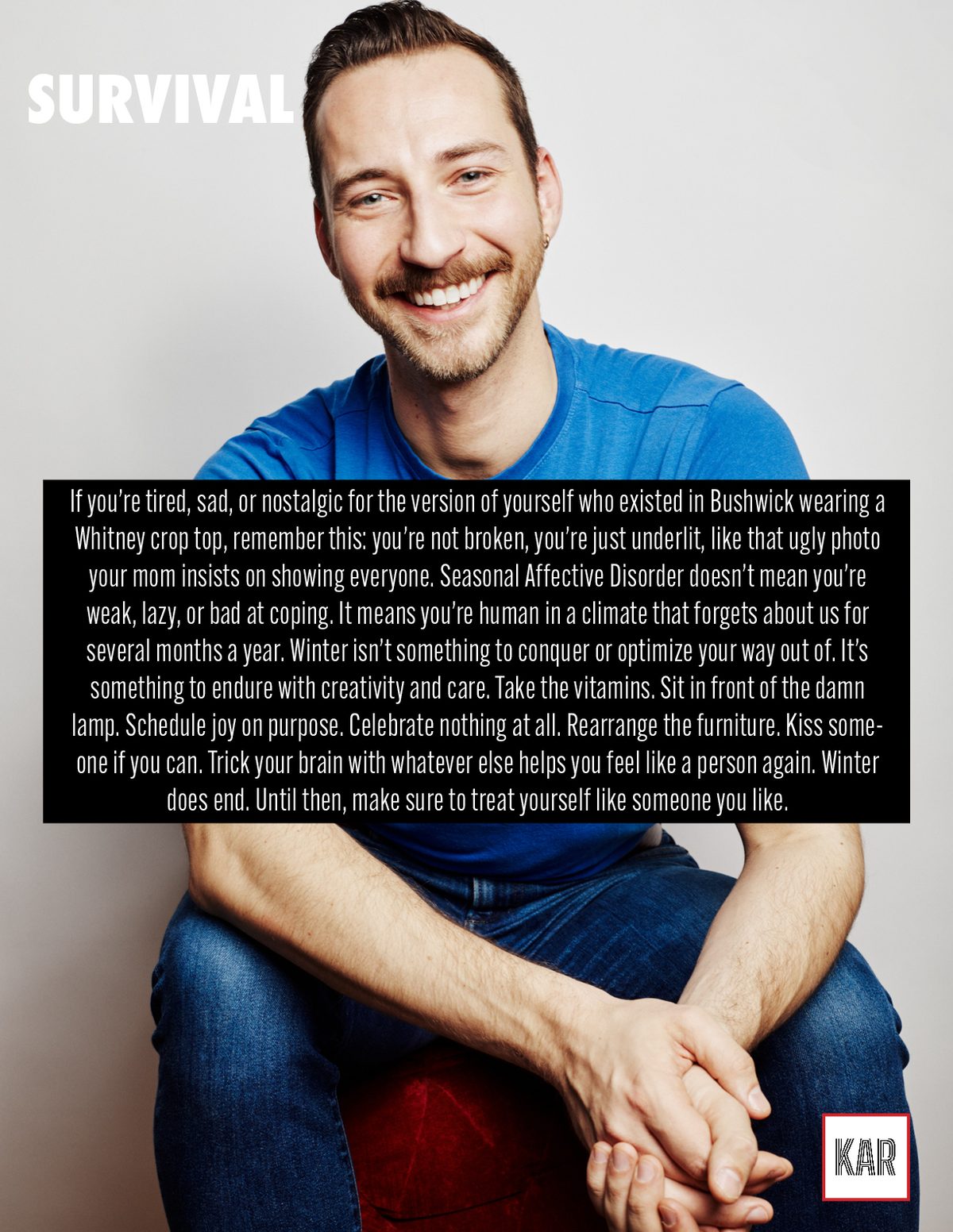

Michael Albert
Originally from a small suburb in Michigan, I’ve spent the last 10 years finding my stride in New York City as a fitness coach, storyteller, writer, and creative Swiss Army Knife. I’ve never been particularly good at sticking to just one thing, and honestly, I like it that way. I’m a bit of an artistic mutt with a long list of jobs, interests, and side quests. At the heart of everything I do is a simple goal: to connect with, motivate, and inspire people. Whether I’m coaching a sweaty class, writing about one of my wildest New York experiences, or painting something ridiculous, beautiful, or somehow both, I love creating things that make people feel something. I’m drawn to the messy, unexpected, and genuinely human parts of life, and I like finding different ways to turn them into something worth sharing. If there’s a throughline in all the different things I do, it’s probably curiosity, and a belief that you don’t have to fit neatly into one box to make something meaningful.
All pieces by Michael Albert →