
Marta Morawska Is Building the Future of Behavioral AI
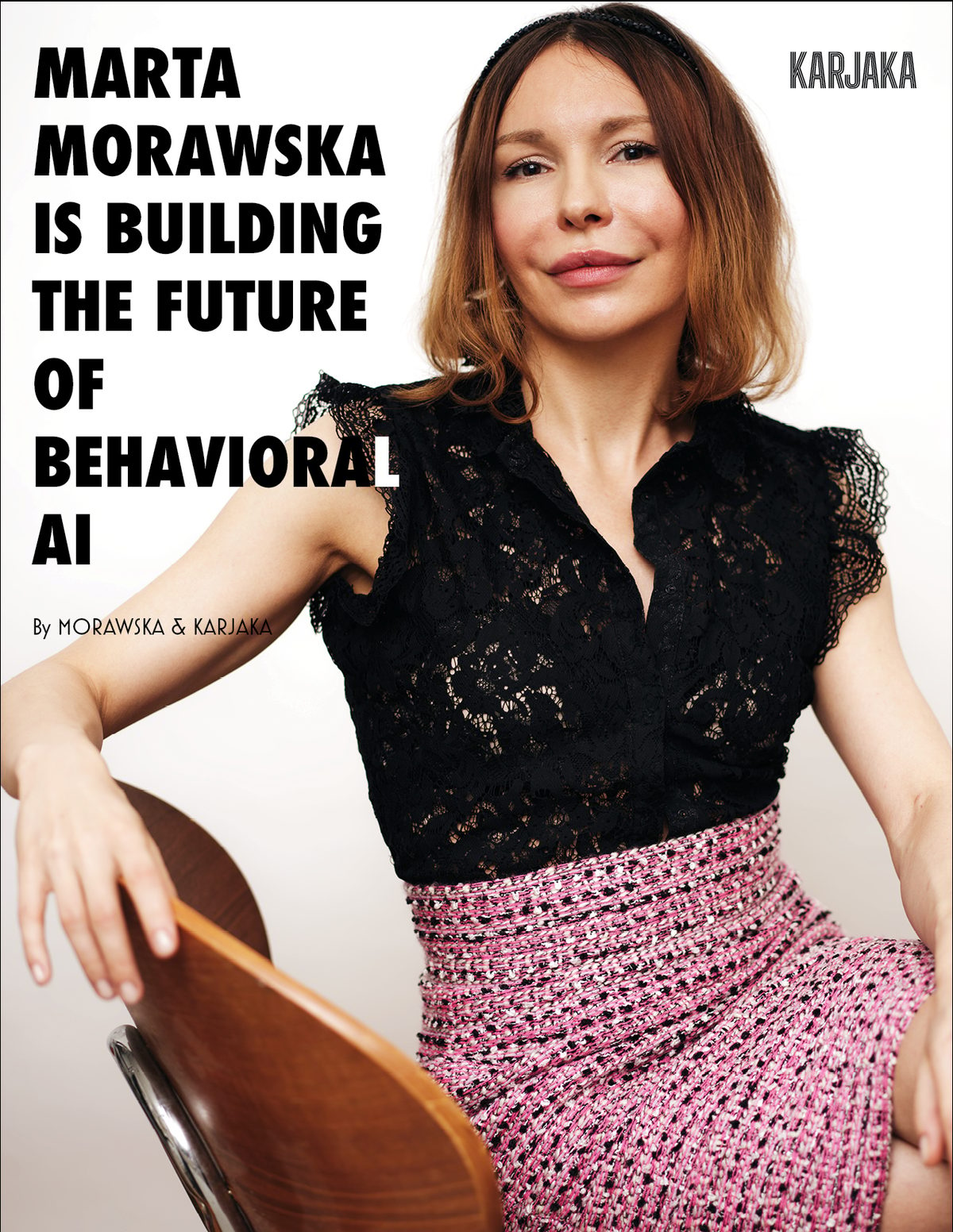
Every major leap in science came from building precision infrastructure: genomics for medicine, algorithmic trading for finance, real-time supply chains for logistics. But when it comes to people — talent, mental health, education — we’re still guessing. CVs, interviews, and intuition drive decisions worth billions. The result: wasted potential on a massive scale — lost productivity, innovation and growth.
Behavioral AI is the next frontier. It makes human development as precise and data-rich as finance or medicine.

Marta Morawska is building that frontier. By the time most of her peers were finishing one degree, she was already enrolled in two PhD programs — Interdisciplinary Humanities focused on psychology, sociology, and anthropology and later Economics & Business. She spent over two years in the Arctic Circle, where she co-founded a medical practice serving nearly a quarter of the local population, including indigenous Sámi communities, while conducting research on resilience and cognition in extreme environments.
After her work in the Arctic, she advised the Oslo government on large-scale public programs before founding MINDACC to pioneer behavioral AI. Fluent in three languages and with experience living across several countries, she has observed how organizations define success differently — yet everywhere, people’s growth and well-being remain the ultimate lever.
Within months of launch, she secured her first multinational pilot in leadership development and talent strategy. In parallel, she extended the approach into clinical practice in New York, embedding behavioral AI data directly into psychotherapy and proving its versatility across domains. These early pilots showed the same principle at work: helping high-performing leaders sharpen their development, while also giving those facing burnout or declining performance clearer paths to recovery and growth.
The Frontier of Behavioral AI

The cost of getting people decisions wrong is enormous. The U.S. Department of Labor estimates a bad hire costs at least 30% of the employee’s first-year salary — and far more for senior roles once recruitment, training, severance, and lost productivity are counted. Deloitte’s 2025 Human Capital Trends finds that organizations effective at enabling human performance are 2.08× more likely to deliver strong financial results — yet over 60% of managers and 72% of workers admit they don’t trust the systems meant to guide those decisions. Behind every number is the same problem: companies still rely on subjective judgments — résumés, interviews, biased conversations — to make billion-dollar talent calls.
Unlike medicine or finance, psychology and people development still operate without precision. In medicine, biomarkers can reveal hidden risks in minutes; in finance, algorithms scan thousands of variables before a trade. But when it comes to people, critical choices are still made with outdated tools that perpetuate bias. The effects are visible across domains: in business, promotions can hinge on a single manager’s personal preference; in mental health, clarity may take months to emerge; in education, classrooms still default to one-size-fits-all instruction. The result is misallocated leadership, disengaged teams, and missed potential at every level.
Behavioral AI closes that gap by turning human behavior into structured data. It gives people and organizations the clarity to grow, connect, and perform at their best. The ROI is immediate — fewer failed hires, higher productivity, stronger retention. Gallup estimates disengaged employees cost companies $450–550 billion annually in the U.S. At the macro level, the World Economic Forum quantifies talent misallocation at $8.8 trillion in lost GDP. Behavioral AI reduces these losses by replacing guesswork with precision allocation and development. Development plans stop being abstract checklists and instead align with how each individual actually thinks, decides, and contributes — transforming talent management from reactive HR practice into a core driver of business strategy.
The same logic extends beyond companies. In human development — whether at work, in health, or in education — precision insight makes progress faster and more meaningful. Behavioral AI isn’t an add-on; it’s the missing infrastructure for how people learn, grow, and perform in the modern economy. Early pilots already show that when behavioral data is embedded into growth systems, outcomes transform: clarity emerges sooner, and progress compounds across work, well-being, and learning.
With AI evolving at exponential speed, the stakes for human development have never been higher. Each generation of models compounds what algorithms can analyze, predict, and automate. That trajectory is not in question. What is in question is whether people will be supported with the same level of infrastructure to grow into the future that is coming.
Morawska’s philosophy is clear: People matter more than anything we build.
Technology without human growth is empty. Every breakthrough in AI or biotech only has meaning if it enables people to live fuller lives — to connect, to create, to solve problems that machines cannot. She believes in the infinite potential within each person, and in the responsibility to design systems that bring that potential forward.
The future will not be defined by AI alone, but by the partnership between human growth and machine intelligence. If AI is becoming superintelligent, then humans must become super-capable — not in the same way, but in ways that complement and expand what technology cannot touch. That requires systems that help people see themselves clearly, adapt faster, and align their strengths with the roles and challenges that matter.
Morawska frames Behavioral AI as future infrastructure for human growth in an era where the pace of change exceeds natural limits. The vision is not incremental: therapy informed by precision insight, education shaped to the individual, leadership grounded in evidence rather than instinct. At scale, she argues, such systems could make societies more resilient, more innovative, and better prepared for the complexity of the future.
Her outlook is unapologetically human-centric: growth should not be left to luck or bias, but designed with the same precision we demand in medicine, finance, or logistics. As machines evolve, people must evolve too — and Behavioral AI is her bet on building the tools to make that possible.
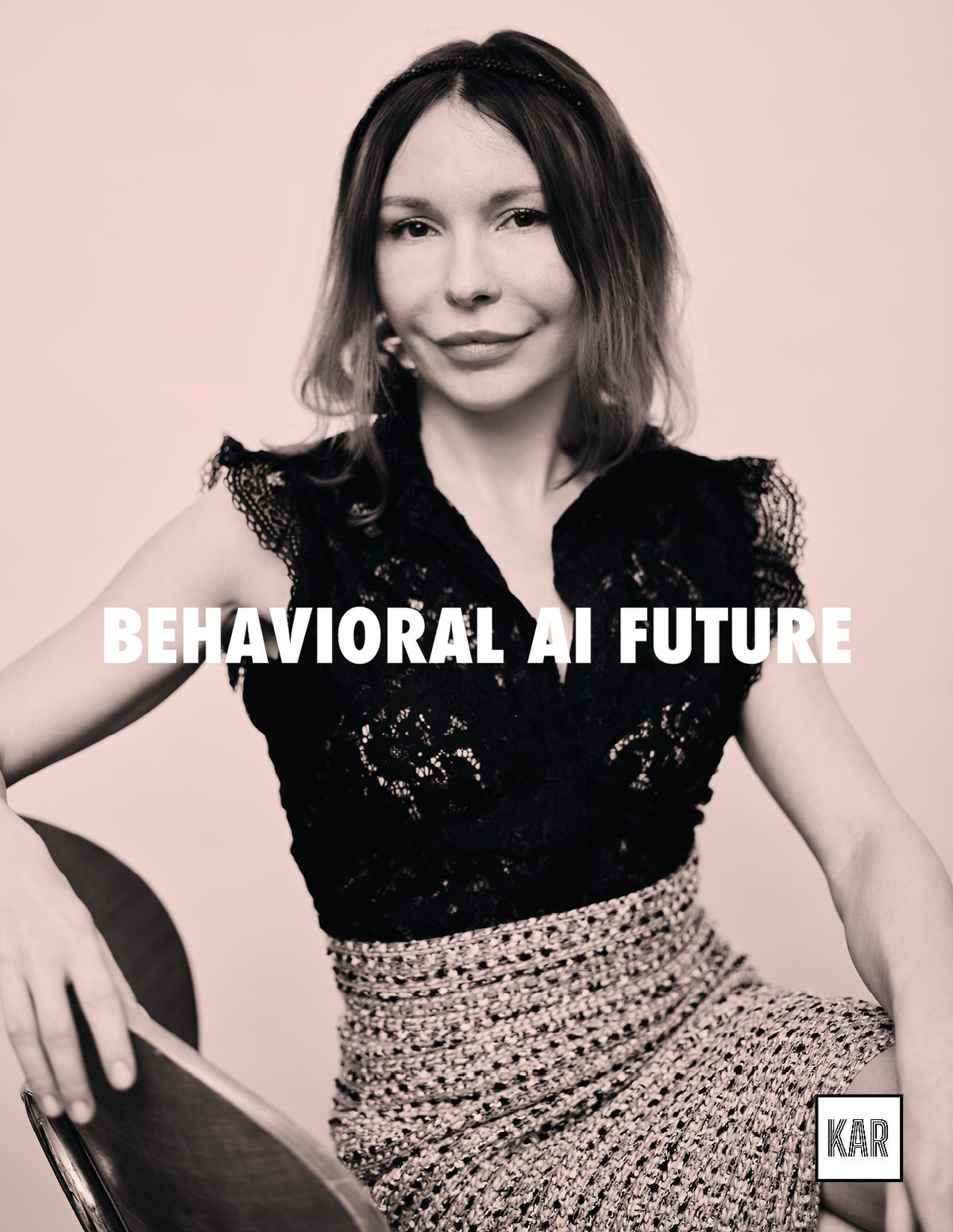

Marta Morawska
Marta Morawska is a Polish-Norwegian entrepreneur and researcher working at the frontier of psychology and artificial intelligence. She pursued doctoral studies in Interdisciplinary Humanities and later in Economics & Business, before co-founding a medical practice above the Arctic Circle serving local and Indigenous Sámi communities. Her career spans government consulting in Oslo and clinical practice in New York. Fluent in three languages and shaped by experience across several countries, she is the founder of MINDACC, pioneering Behavioral AI to bring precision and scale to human development.
All pieces by Marta Morawska →