You, Me and EOP
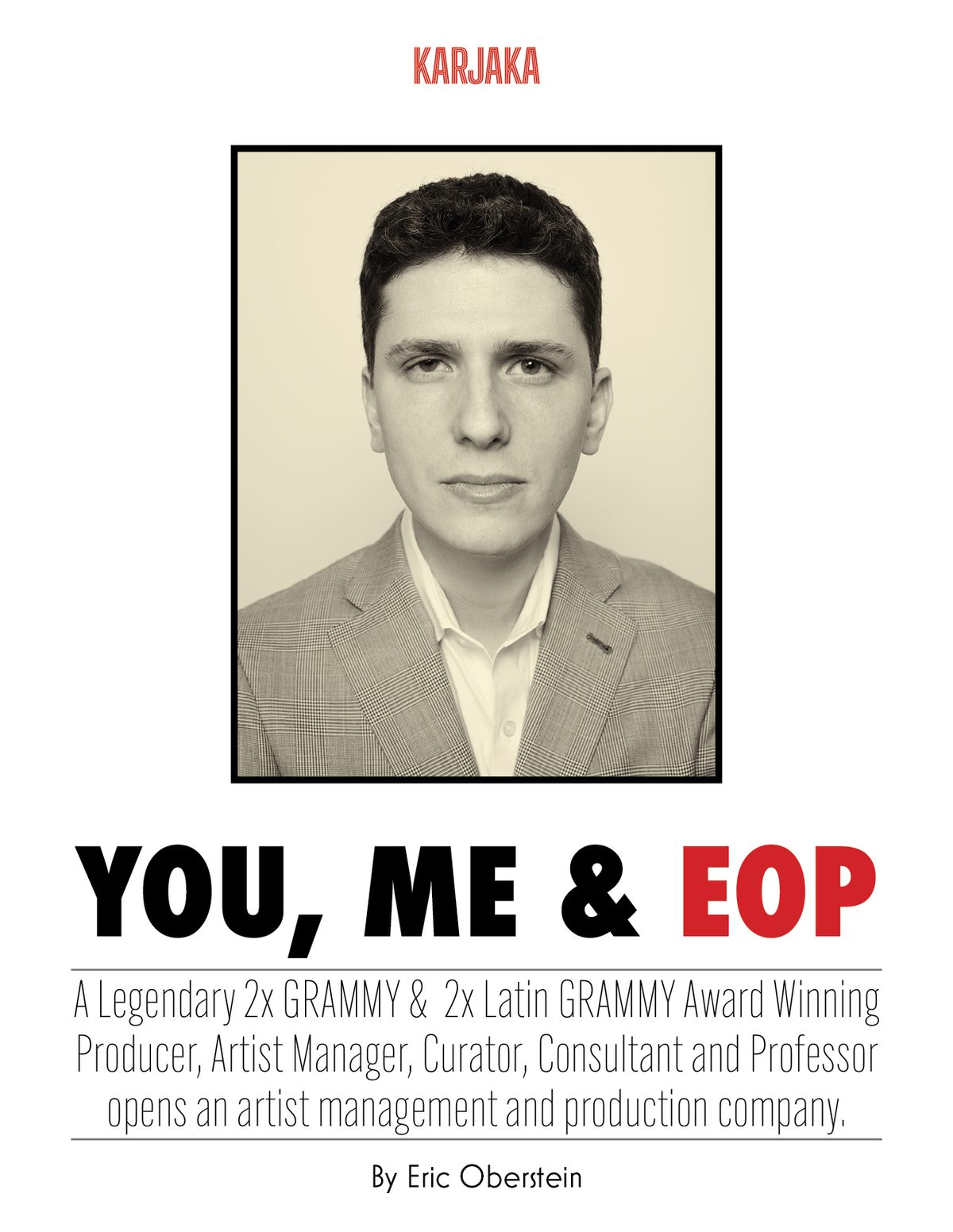
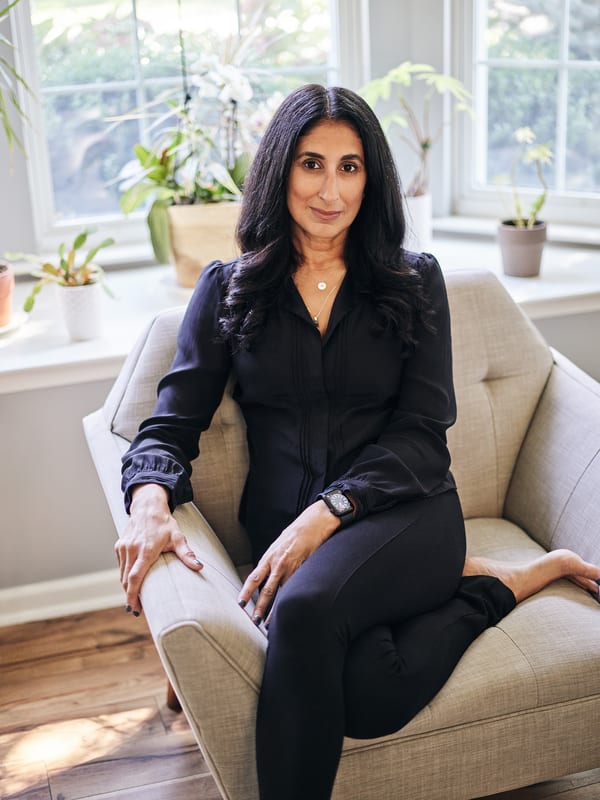
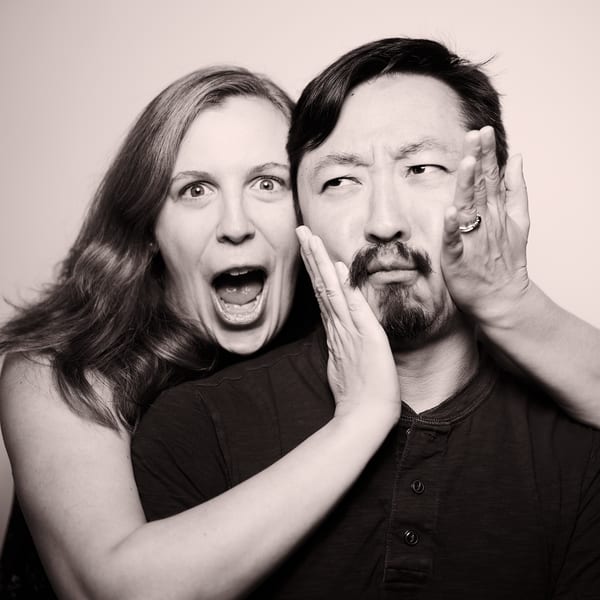
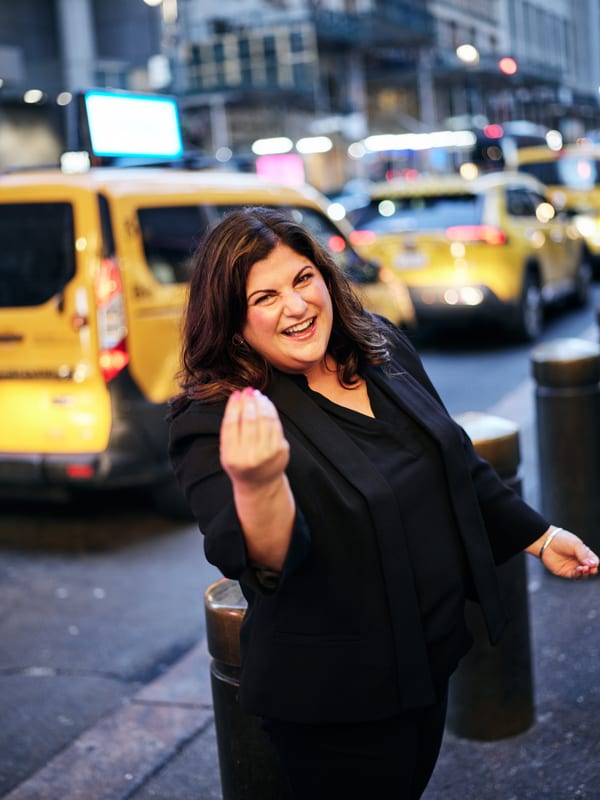
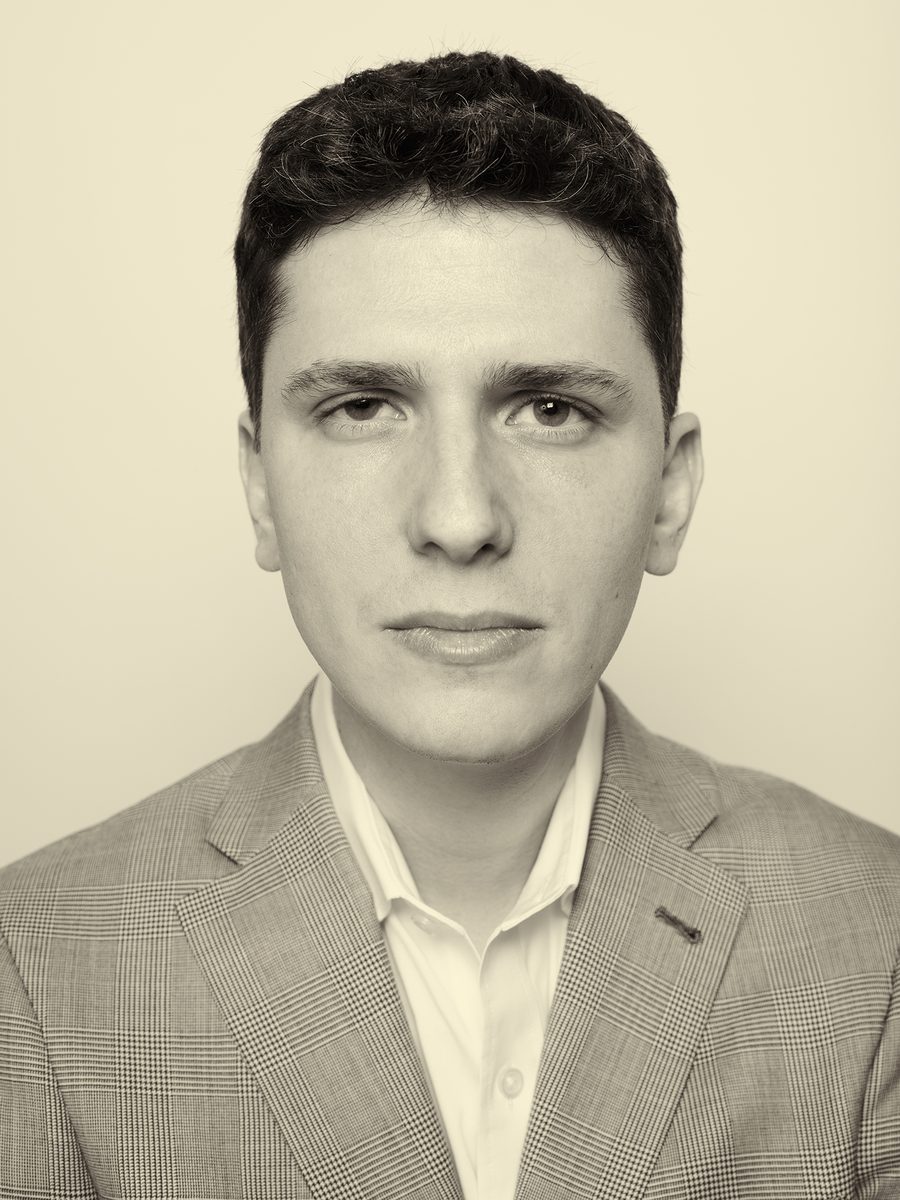
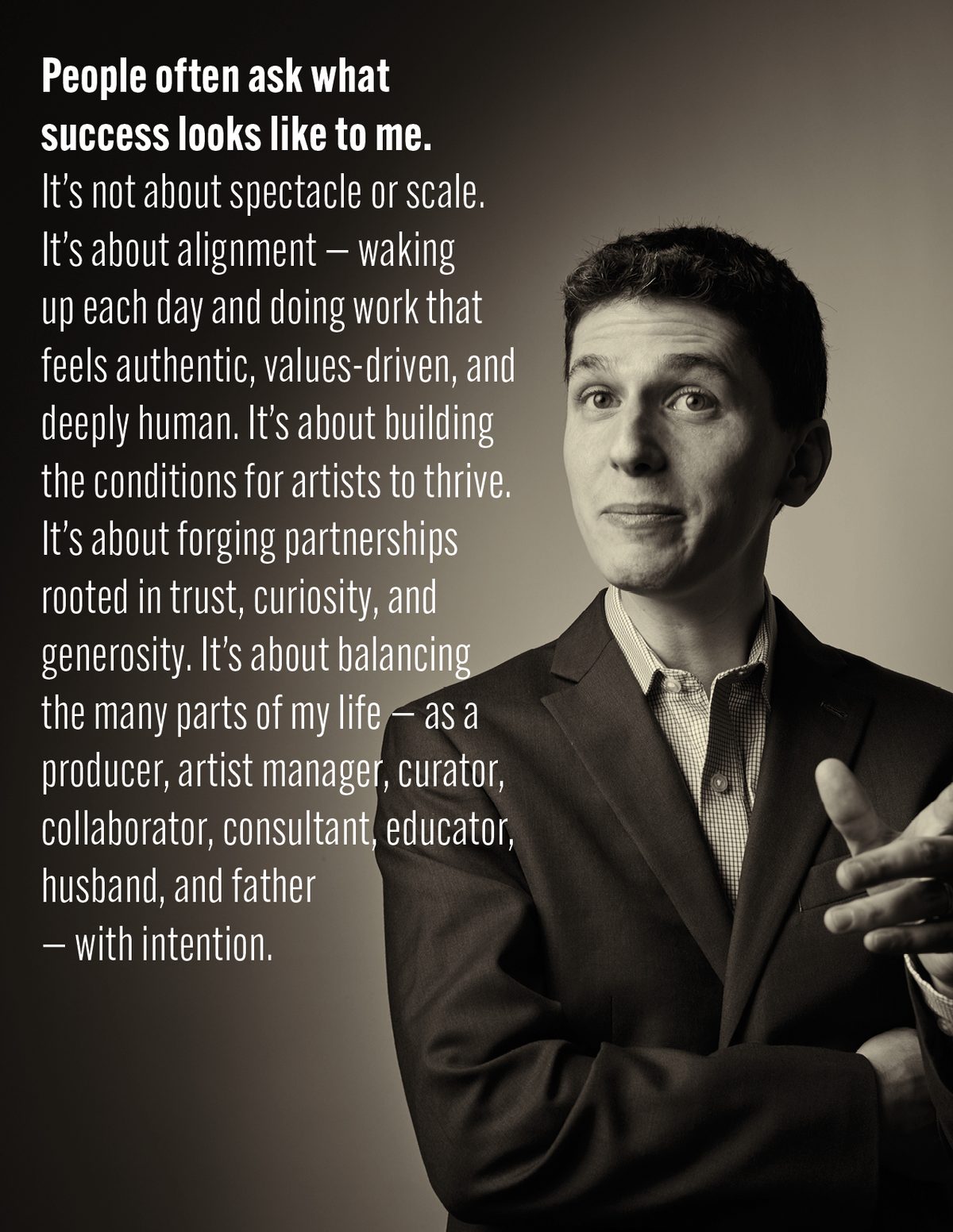
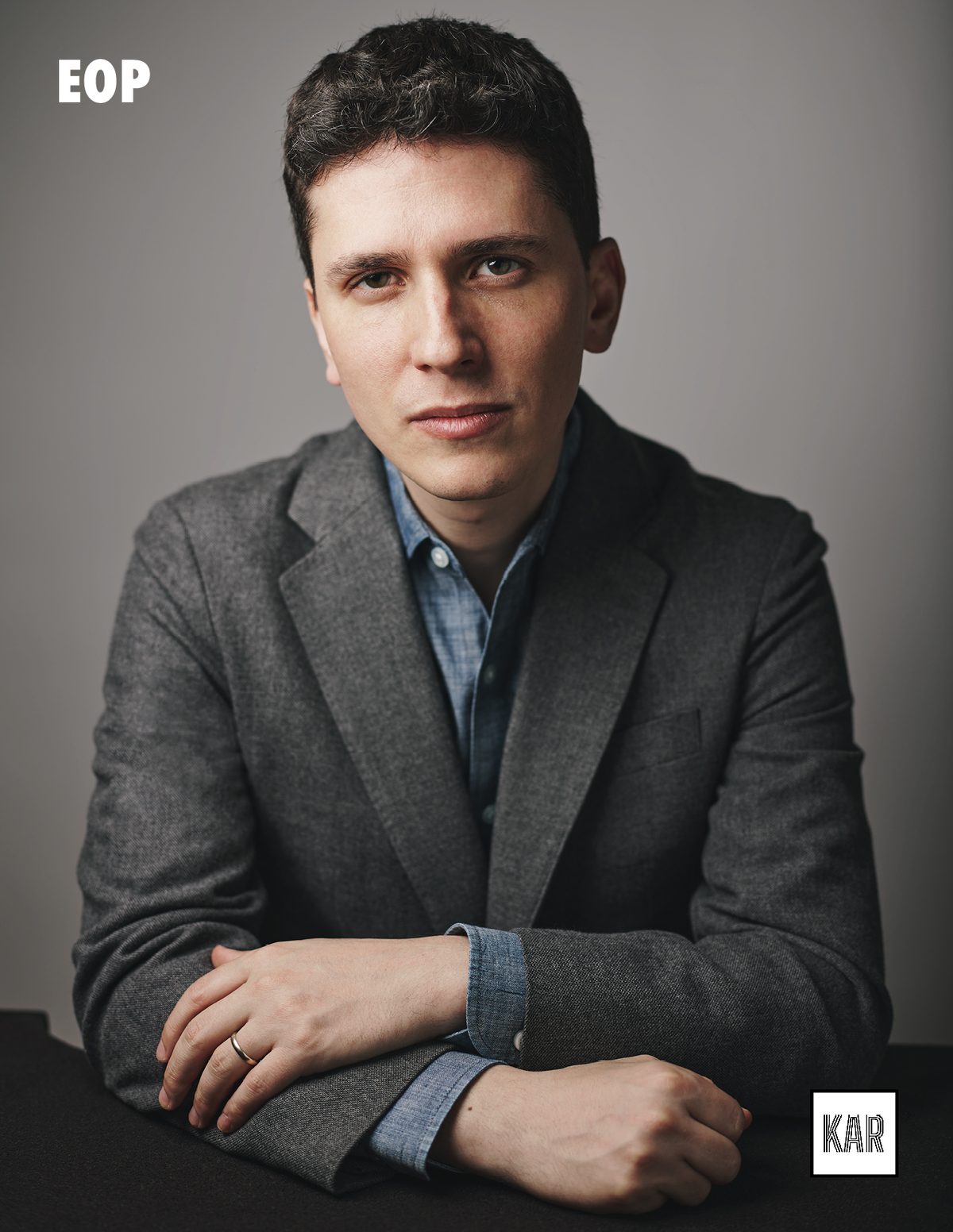
When Aleksandr Karjaka photographed me earlier this year, I was standing at a threshold I’d been approaching for nearly two decades without fully realizing it. His photos captured a moment of transition — a moment when experience, intuition, and long relationships with artists and organizations finally converged into something clearer and more intentional. I was about to launch Eric Oberstein Productions (EOP), my New York-based arts management, producing, and consulting company, though in some ways it felt like I’d been building toward it my entire life.
My life and career have unfolded at the intersections: my Cuban American heritage and New York upbringing, global cultural traditions and American artistic forms, simultaneously inhabiting the creative and the strategic. I’ve always been drawn to collaboration — the quiet work of listening deeply, helping artists articulate what they want to make, and then building the structure, the partnerships, and the resources that allow those ideas to flourish.
I’ve been fortunate to work inside forward-thinking organizations that shaped how I think about creative producing: Harlem Stage, Duke Performances (now Duke Arts Presents), and the Afro Latin Jazz Alliance (now Belongó). Along the way, I produced recordings with artists such as Dafnis Prieto, Arturo O’Farrill, Luciana Souza, Larry Klein, Rafiq Bhatia, Vuyo Sotashe, and Chris Pattishall — projects that led to critical acclaim or GRAMMY and Latin GRAMMY recognition, and that taught me how transformative it can be when trust and creativity coexist.
Since 2016, my ongoing collaboration with Prieto — a Cuban-born, MacArthur Fellow and GRAMMY-winning bandleader, drummer, composer, and educator — has shaped a major part of my producing life. Together we’ve developed albums, new work commissions, tours, book releases, and multidisciplinary performance projects that bridge genres and traditions. In my institutional roles, I’ve helped shepherd new work with artists including Bijayini Satpathy, Craig Harris, Gerald Clayton, Leyla McCalla, Jenny Scheinman, Imani Winds, and others. Those projects reinforced what I’ve always believed: when artists feel truly supported, they create work that resonates far beyond a single premiere.
But over the years, I began to sense a gap in the field — a need for producers who could offer artists holistic, long-term support; who could help institutions think strategically; who could develop projects across disciplines; and who could bring together the creative and managerial sides of the work with equal fluency. I wanted a structure nimble enough to hold all that I do.
That impulse — to build something responsive, creative, grounded, and artist-centered — is what led me to start Eric Oberstein Productions.
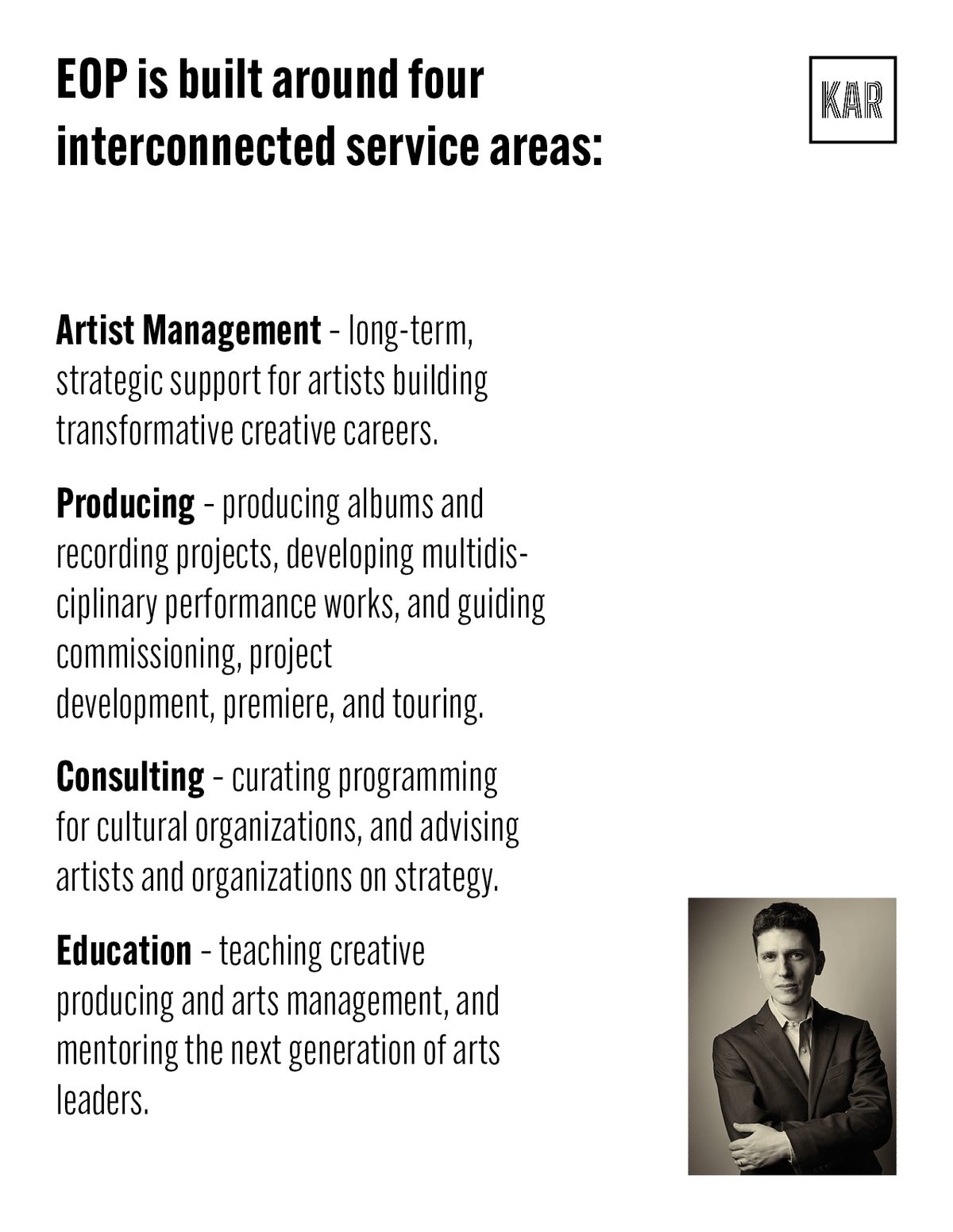
These areas reflect how I naturally work: zooming in to help shape a single project, and zooming out to imagine multi-year artistic arcs.
Today, I’m proud to partner with a roster of extraordinary artists — in jazz, global music, contemporary classical, dance, and multidisciplinary practices — whose work is reshaping the cultural landscape: Prieto, shirlette ammons, Steven Bernstein, Patricia Brennan, Michela Marino Lerman, Kalí Rodríguez-Peña, and Emilio Solla, among others. With each of them, the work looks different — developing new albums, conceptualizing performance projects, securing commissions, building residencies, planning tours, strengthening narrative and visibility, and ensuring that the path forward is strategic, sustainable, and aligned with their artistic values.
On the organizational side, I’m advising on cultural strategy in cities across the country, including Seattle and Durham, North Carolina. I’m programming jazz and contemporary music for the Celebrity Series of Boston. I’m excited to continue my curatorial work, as well as participate in cultural planning projects — asking big questions about how cities nurture artists, audiences, and cultural life.
In addition, teaching remains central to my identity. I’m currently an adjunct faculty member at Teachers College, Columbia University and George Mason University, where I teach creative producing and performing arts management, respectively. Time with students keeps me rooted in possibility. They remind me why I chose this field in the first place: because the arts can change us, can reveal us to ourselves, and can connect us to one another in ways few things can.
Earlier this month, I ran the New York City Marathon, a dream I’d had since childhood. It felt fitting: the marathon is long, messy, beautiful, full of unexpected turns, and requires a community to pull you through. In many ways, it mirrors the creative life — the slow accumulation of effort, the bursts of inspiration, the setbacks, the breakthroughs, the people who stand alongside you and push you forward.
Looking ahead, I’m energized. The artists I’m working with are creating extraordinary work. My consulting projects are exploring curatorial and strategic frameworks in ways I feel deeply proud of. My teaching connects me to the next generation of imaginative producers and arts leaders. And EOP is growing with clarity and purpose.
I’m grateful — to the artists who trust me with their visions, to the organizations that invite me into their planning, to my students, and to collaborators like Aleks who capture moments that hold far more than an image.
This chapter feels expansive. It feels like the continuation of everything I’ve learned — and the beginning of everything that’s still possible.
— Eric Oberstein, NYC, November 28, 2025
Eric Oberstein
Eric Oberstein is a 2x GRAMMY and 2x Latin GRAMMY-winning producer, artist manager, curator, consultant, and educator. A respected and trusted arts leader, he is founder of Eric Oberstein Productions, an NYC-based artist management and producing company, serving as a collaborator and guide to adventurous, culture-changing artists, as well as an arts management consultancy, curating transformative programming and advising cultural organizations on strategy. With a long track record of working with prominent artists and arts organizations, Oberstein has developed a career building environments that help artists and organizations achieve their goals.
All pieces by Eric Oberstein →