Reinvention in the Third Act

The work of visionary painter Hilma af Klint — erased from the art history she helped shape — gave Paola Yamel Lima permission to stop disappearing.

Paola Yamel Lima will tell you she didn’t invent herself. “I didn’t invent this person,” she says. “I was there.” The circumstances just needed to get out of the way.

For a long time, the circumstances did not get out of the way. She is a mother, a partner, the person who kept everything running – the chef, the driver, the emotional anchor. Born of a Cuban mother and Argentine father who steered their kids toward law. A domestic life so complete it barely left room to notice what else was underneath. And then a relationship that worked to erase what remained. She describes it without drama: “I was almost deleted.” That’s what a person with that kind of pathology does to a partner — someone so full of vibrancy and life, of course, they want to squash it.
“I was raised to be pretty,” she says. “Here we are.”
Four words: A whole former life. And the quiet, total fact that she has walked out of it.
What cracked it open was a painter she’d never heard of. Hilma af Klint spent decades making some of the most radical abstract work of the twentieth century — visionary, enormous, unlike anything being made at the time. And then, at her own insistence, Hilma kept it hidden from the world until after her death. She didn’t trust the world to be ready. For most of history, her name was simply missing from the story. The art world is still catching up.
—
Paola went to the Guggenheim with her sister to see the retrospective and walked out holding onto the wall. She went home, and six days later had her Archimedean moment. She started pulling at threads — af Klint’s influences, her notebooks, the private cosmological framework she’d spent a lifetime building and protecting. Books, research, timestamps on every note. The research bled into drawings, the drawings into writing, the writing into everything. The work as a living organism. Timestamps going back seven years. It starts, she says, with not knowing what you’re looking for. It finds you. Like a whisper.

Then the pandemic, a separation, seven months turning forty at her parents’ house with her daughters. A lot, all at once. But on the other side of it something had clarified. She’d grown too isolated inside her own work — too alone with too many things and no one to think with. So she decided to go back to school.
She’d hesitated for two years.
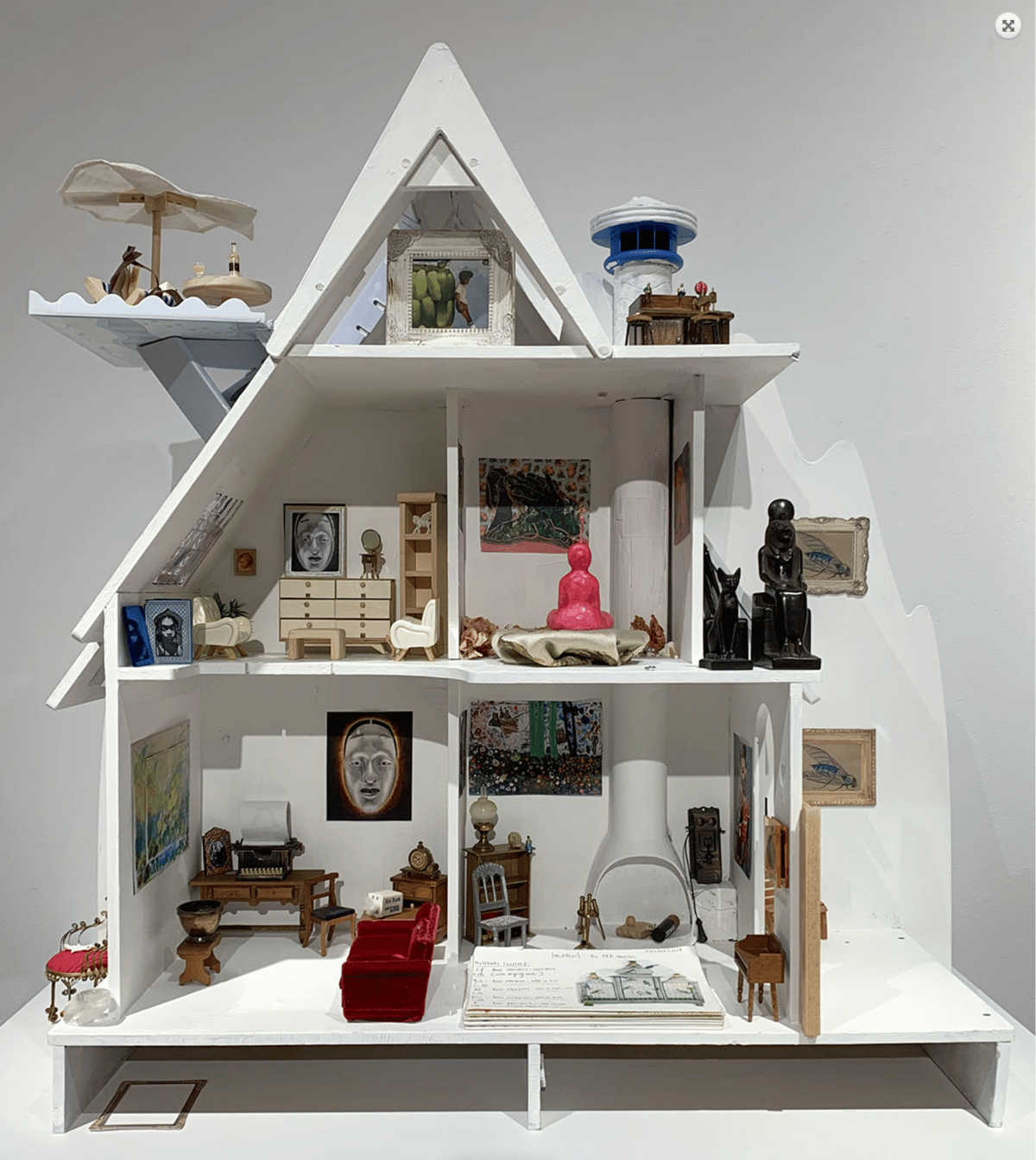
Worried she wouldn’t follow through, she knew she’d hate herself if she didn’t commit fully. She went anyway, escaped into her art — a one year MFA intensive in lower Manhattan at the New York Academy of Art, older than most of her classmates, already carrying years of self-directed research she’d built entirely on her own, followed by two more years of study as Tracey Emin’s inaugural scholar. She called and still calls her studio a lab. Curated miniature shows inside a found dollhouse for her professors and still their own work, printed small, installed at precise eye level. The head of the drawing department put his whole face inside and told her he hadn’t had a solo show in years
“I taught it all to myself. All of it.”

Hilma af Klint made work of staggering vision, and the world wasn’t allowed to see it for decades. Paola was almost deleted by someone who couldn’t hold what she was, and handed a life before that which had no room for it either. Two women, a century apart, the same quiet erasure.
Her two teenaged daughters are watching. They’re both creative. They both write beautifully. Paola wanted them to see this specifically. Not just the art. The decision. The refusal to stay invisible.
“I’ve got to make a legacy for them.”
“There’s room for all of us,” she says. “Nobody makes the same thing. I just want to make things that people like to look at and make them think a little.”
Hilma af Klint hid her work and trusted the future to find it. Paola Yamel Lima is doing the opposite, making herself visible, making noise, making something her daughters can hold in their hands and point to and say: she was here. She did this. She was always this person.
She was. The third act is just where she gets to show it. But first, a website. Stay tuned.
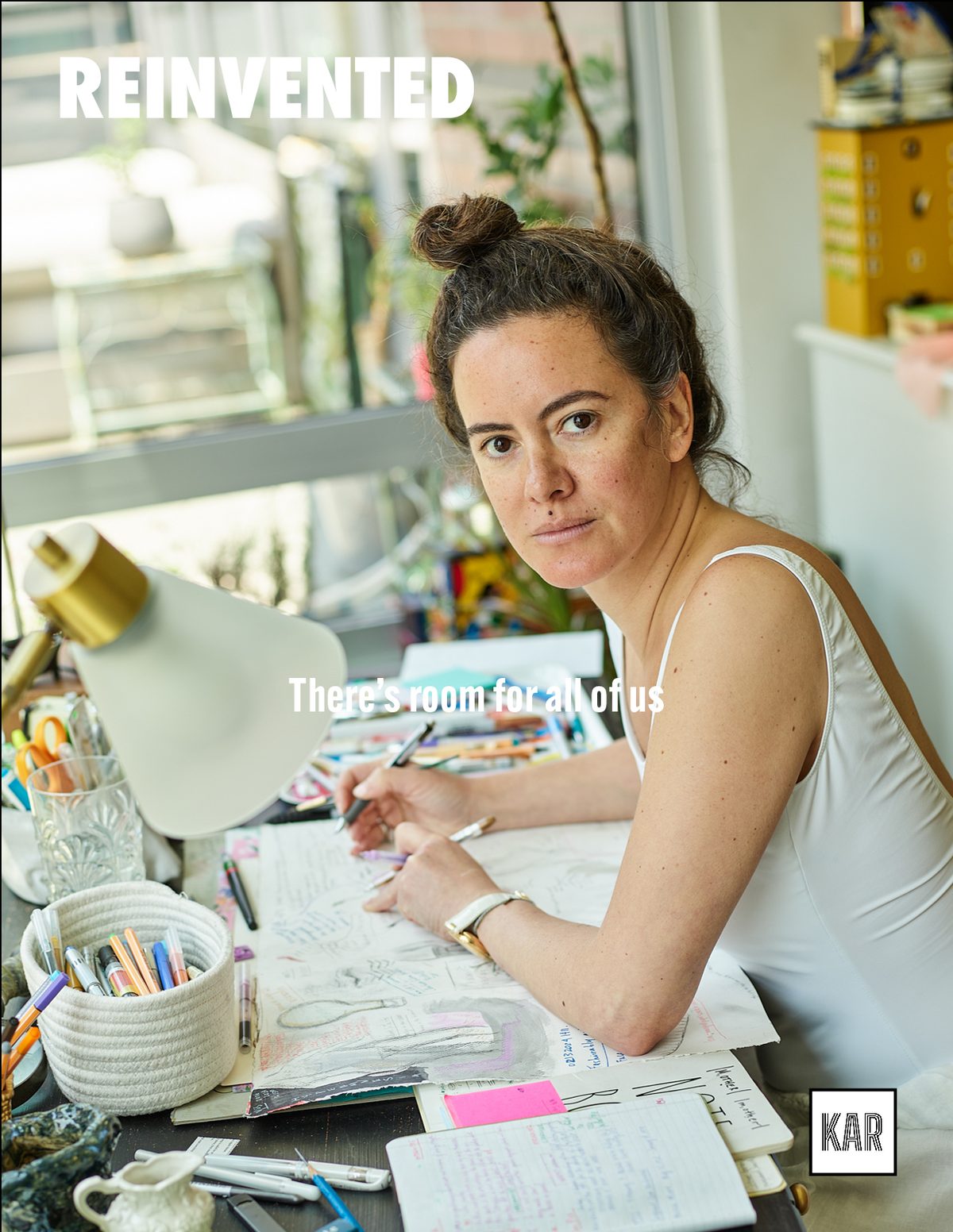
Some histories get written after the fact. This Women’s History Month, Paola Yamel Lima is writing hers in real time, and making sure her daughters have a front row seat to write theirs!
https://www.instagram.com/paolayamel
From a transcript of a KARJAKA Exclusive interview in 2024.