Artist’s Corner: Kevin Baldwin

From Issue 93 — The Stress Test

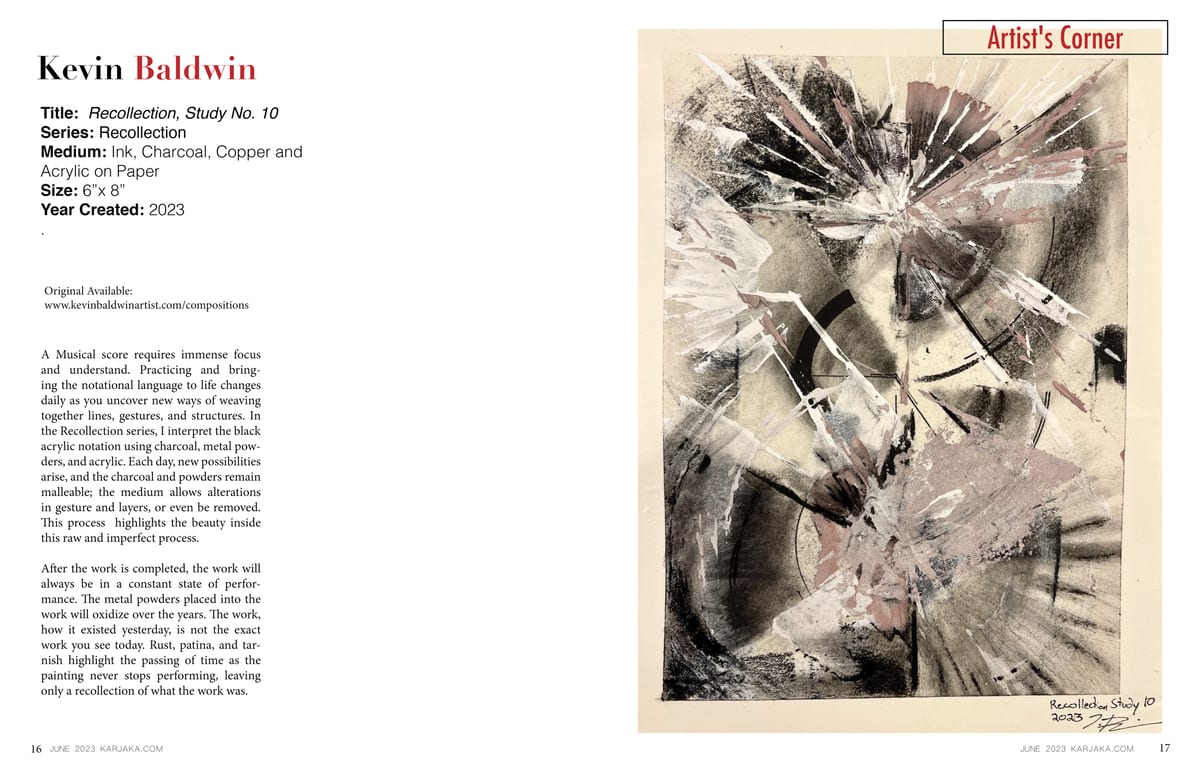
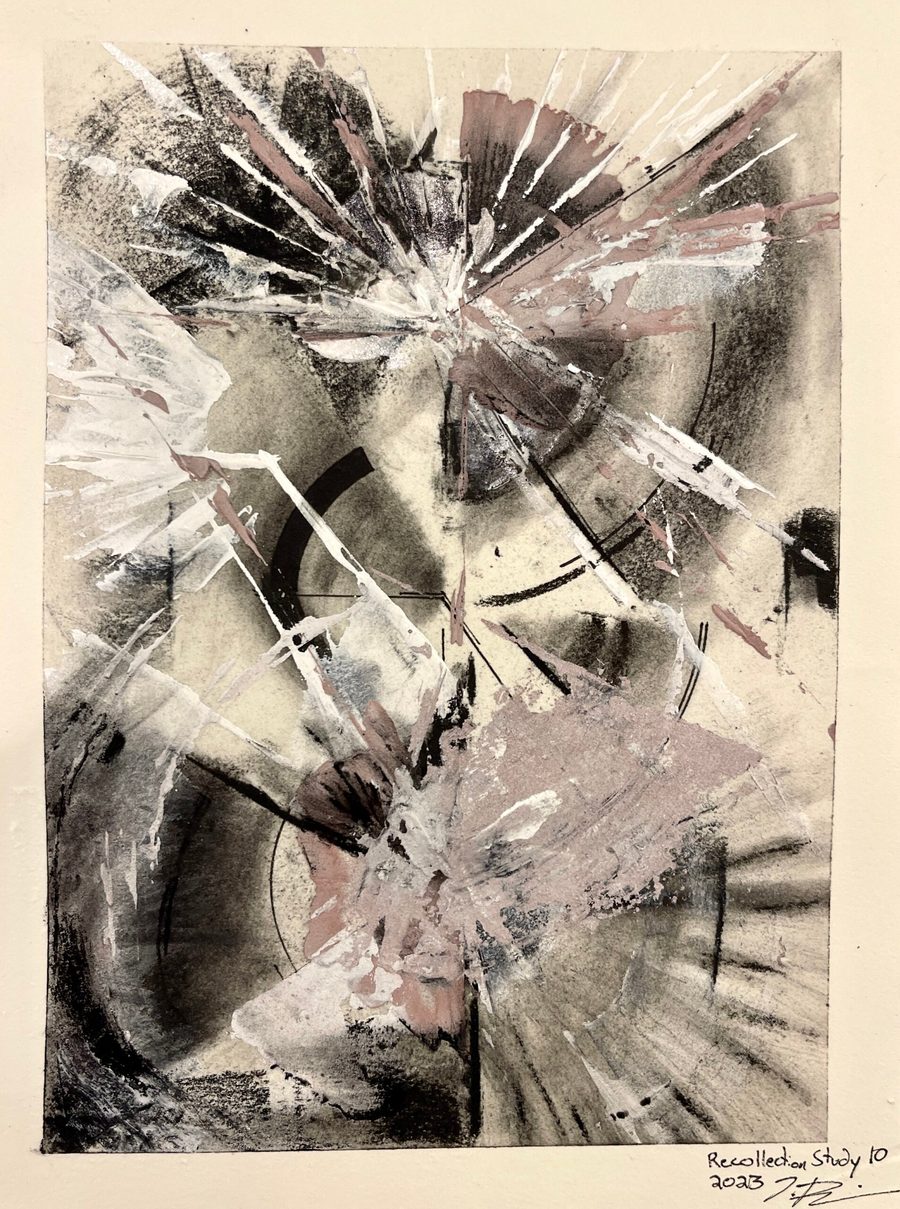
Recollection, Study No. 10

A Musical score requires immense focus and understading. Practicing and bringing the notational language to life changes daily as you uncover new ways of weaving together lines, gestures, and structures. In the Recollection series, I interpret the black acrylic notation using charcoal, metal powders, and acrylic. Each day new possibilities arise, and the charcoal and powders remain malleable; the medium allows alterations in gesture and layers, or even be removed. This process highlights the beauty inside this raw and imperfect process.

After the work is completed, the work will always be in a constant state of performance. The metal powders placed into the work will oxidize over the years. The work, how it existed yesterday, is not the exact work you see today. Rust, patina, and tarnish highlight the passing of time as the painting never stops performing, leaving on a recollection of what the work was.


Check This Out

Artist’s Corner: Kevin Baldwin

On Notation, Negative 1 The score of a musical work is fascinating. As a composer, I spend hundreds of hours alone with a score to...

A Letter to the Painter I Didn’t Know I Was Becoming

Dear reader, I didn’t think I’d become a painter. When I was four years old, I told my parents I wanted to be a dessinatrice—a graphite artist. I didn’t know what that fully meant, only that I wanted to spend my life with pencils in hand, in a quiet room, making images appear where there was once only blankness, until late in the night. It felt like a kind of peaceful magic, and it still does. But life, as it often does, led me through a long and scenic route.

Artist’s Corner: Kevin Baldwin

The score of a musical work is fascinating. As a composer, I spend hundreds of hours alone with a score to unearth and present the uniqueness of every sound. I consider the physicality of a sound, both in the depth of overtones and frequencies and in the most mi-nuscule human motions it takes to produce them. I consider texture, the harsh and grinding color of the cellist utilizing over-pressured bowing, and the intimate fragility of the flautist's unstable multi-phonic. I consider shape, from violent rhythmic gestures to light, lyrical flurries. I consider, how variations larger blocks made up of colors, texutres, layers, and rhythms work together to highlight every unique aspect of a sound. I consider the weight of each and every observance I make, and I ensure every mark in the score best reveals the essence of a sound.

All Categories

LEAVE A REPLY

Please enter your comment!
Please enter your name here