Black Americana
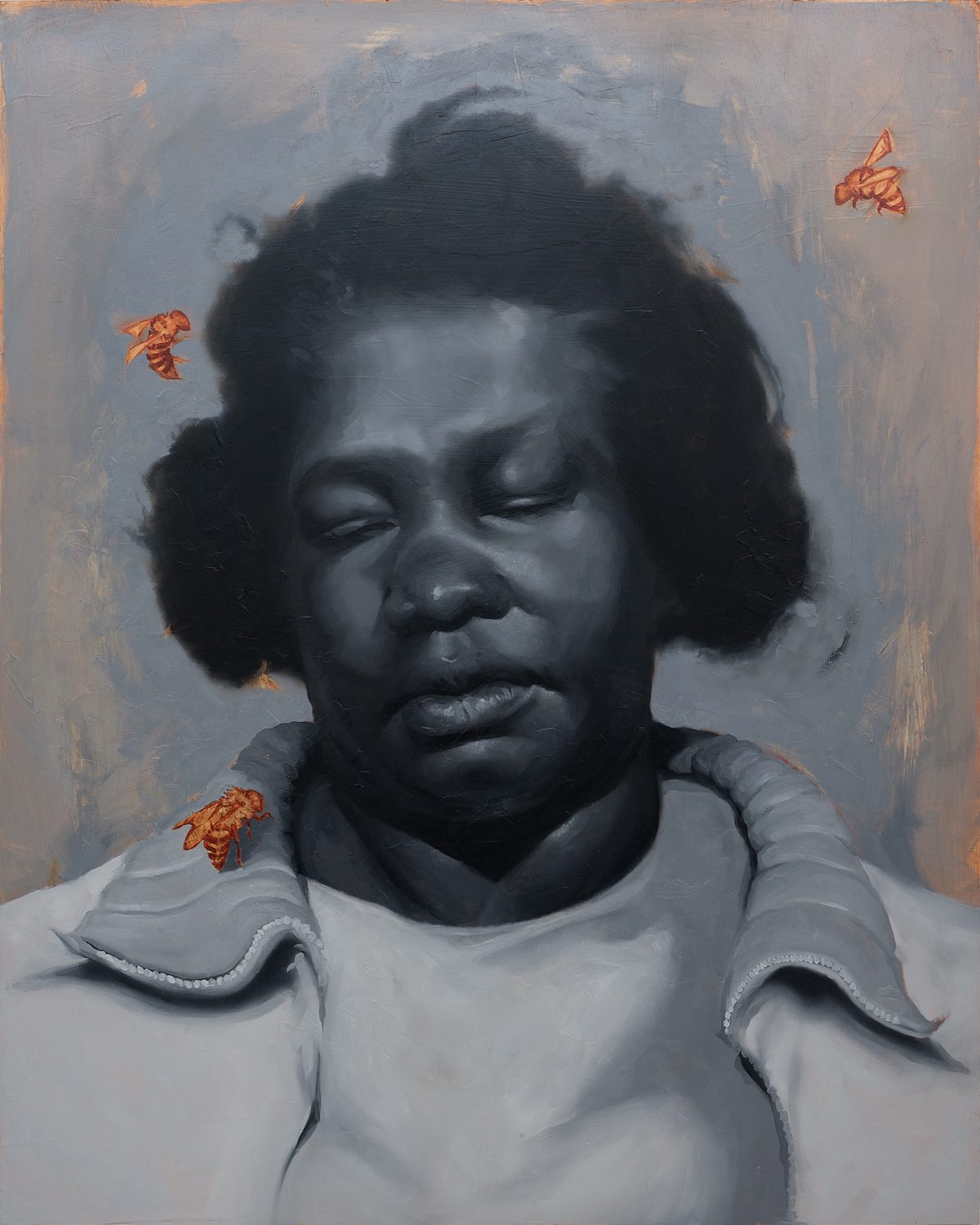
I’ve always been telling stories.
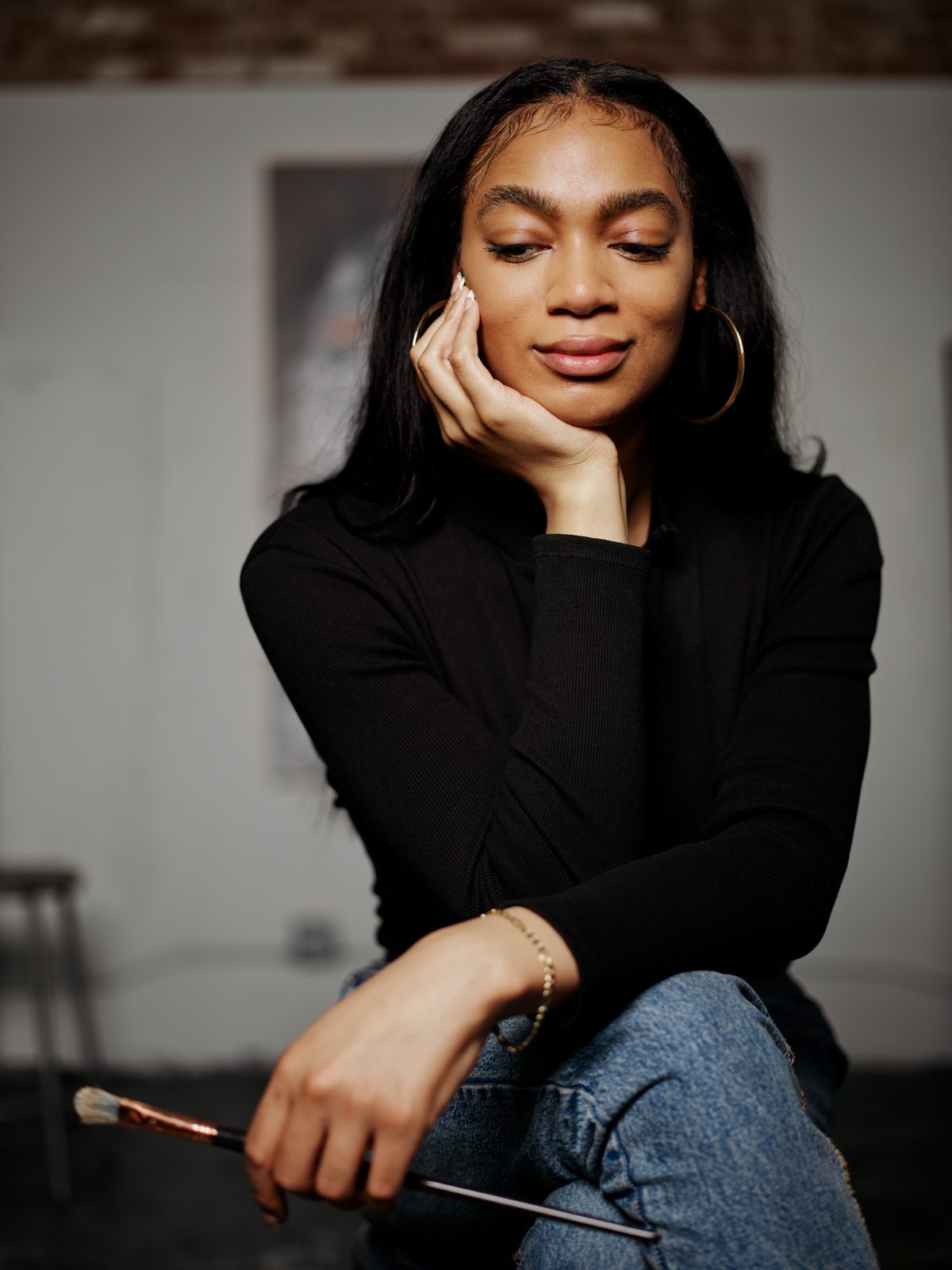
Before I had the words, I had images, gestures, make-believe worlds. Art didn’t arrive like a choice, it found me the way light finds a crack in the door. From a young age, I understood that stories weren’t just entertainment; they were survival, a way of making sense of the world and my place within it.
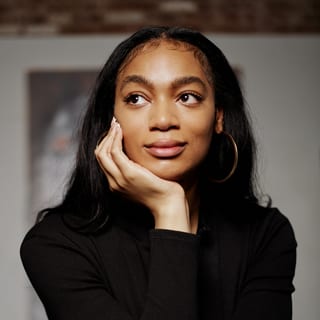
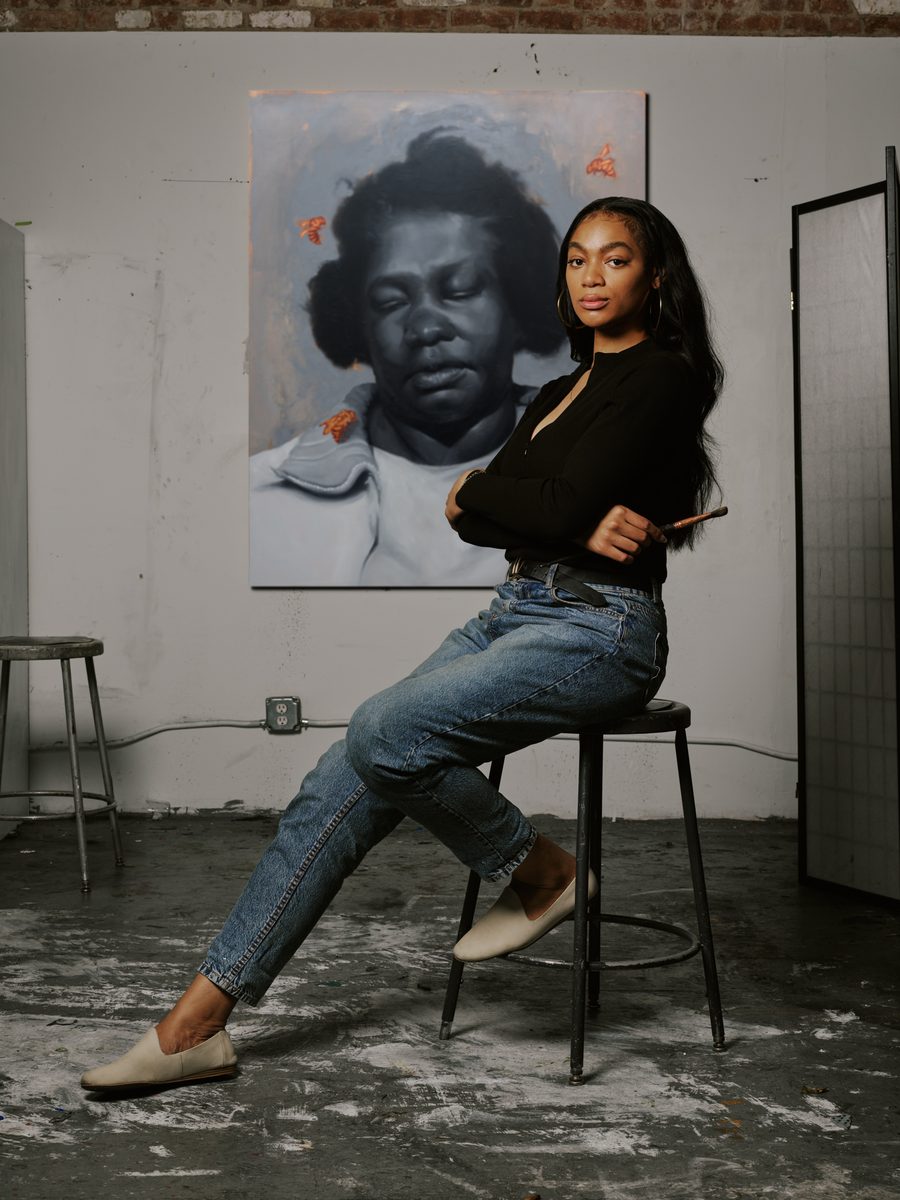
As a Black trans woman, I make paintings that explore Black American culture through the lens of Americana. I’m interested in questions: Who gets remembered? Who gets edited out? Who gets to define “American”? My work is both an homage and a challenge: it honors the richness of Black culture, its rhythms, its sorrow songs, its everyday magic, while also holding space for the lives and identities that have too often been pushed to the margins.
I am part of the lineage, but I also live at its edge. I exist in a space where gender, memory, and visibility collide. And in that space, I paint.
I grew up in a house where masculinity wasn’t just a norm, it was the atmosphere. My father was a professional football player, a man who moved through the world with the kind of quiet authority you don’t question. He was strength and discipline, toughness and silence. My mother, too, was formidable. Practical, direct, and unbothered by softness. She had a strength that was less about volume and more about gravity. She didn’t bend.
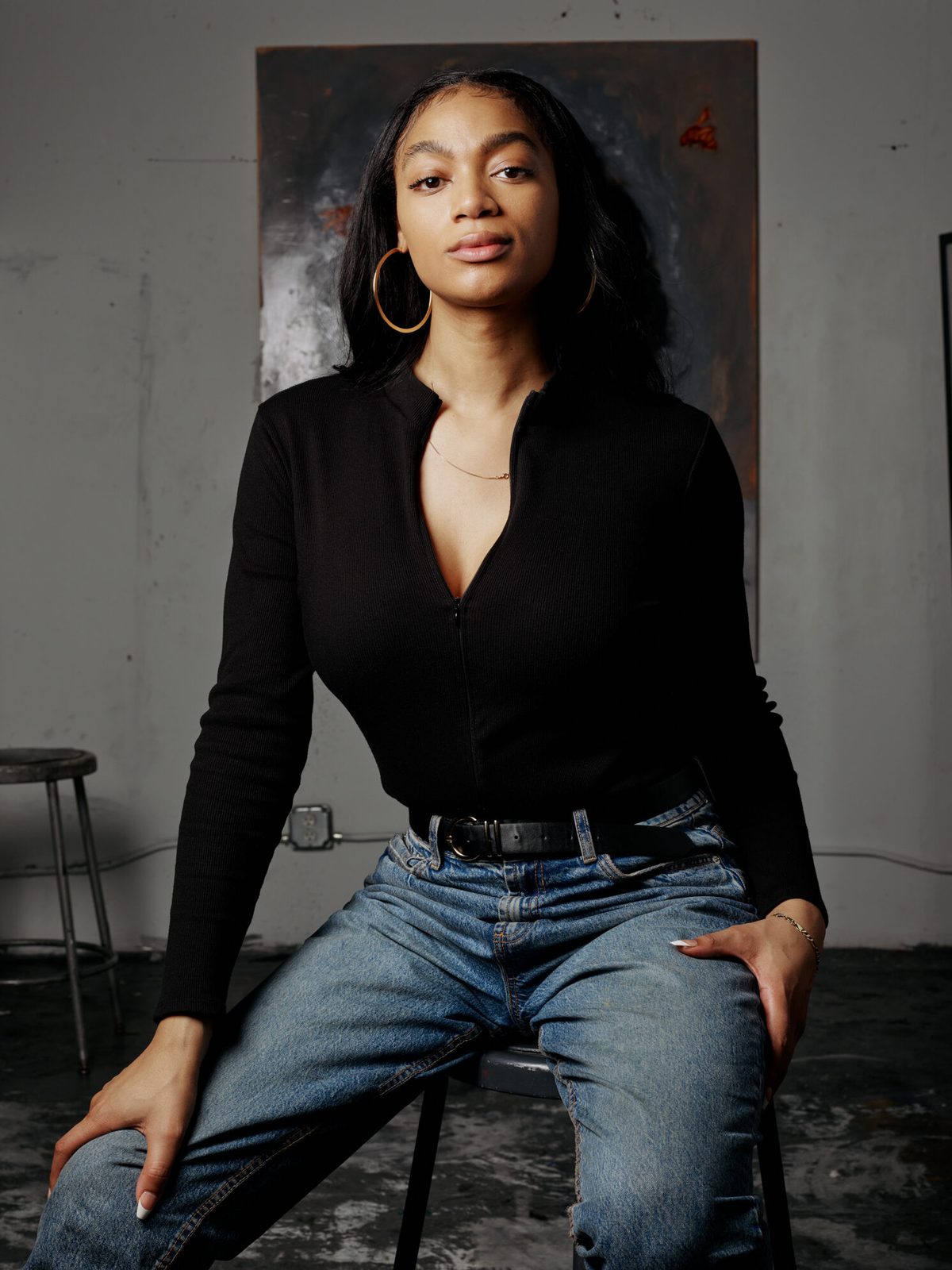
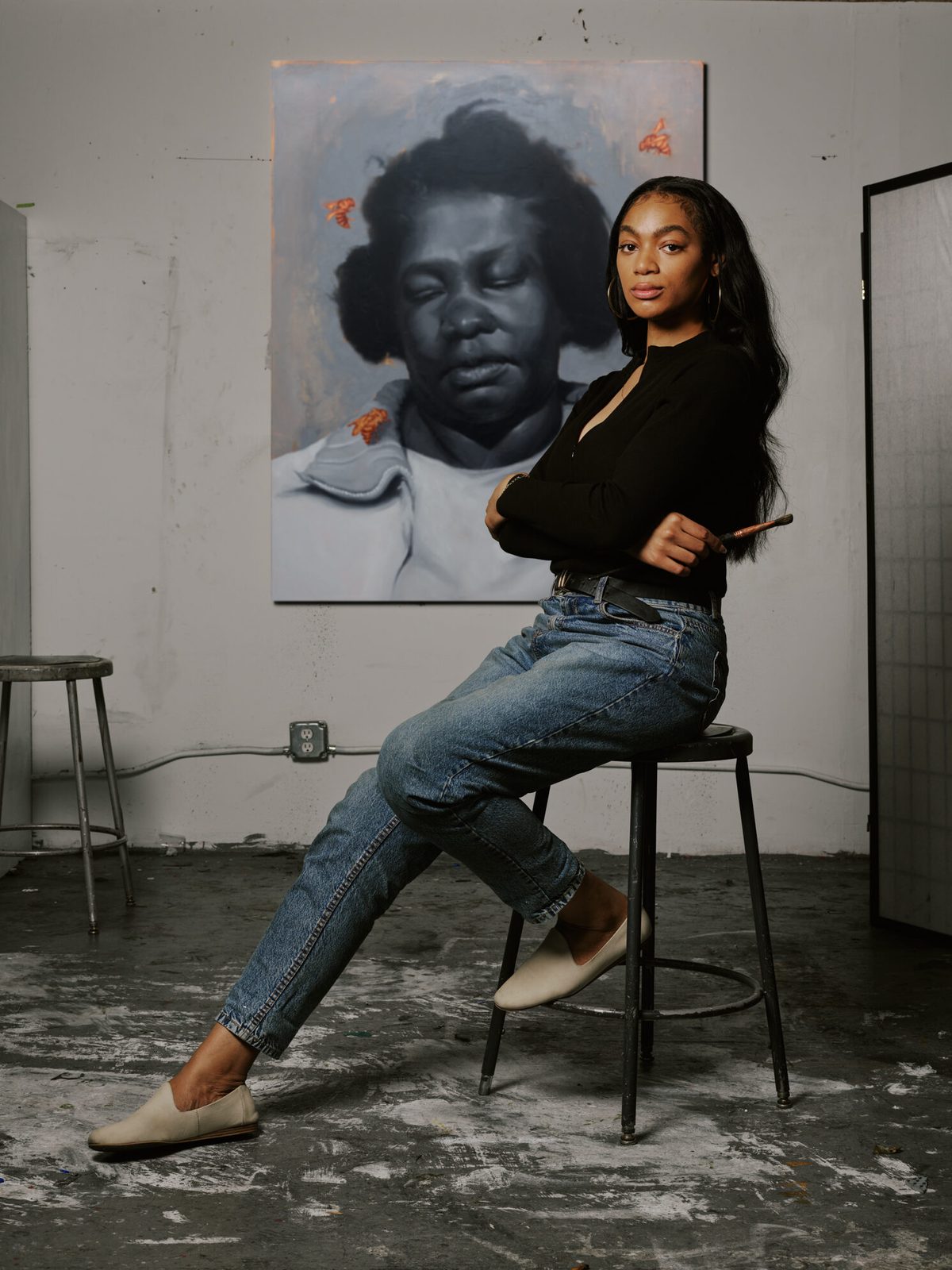
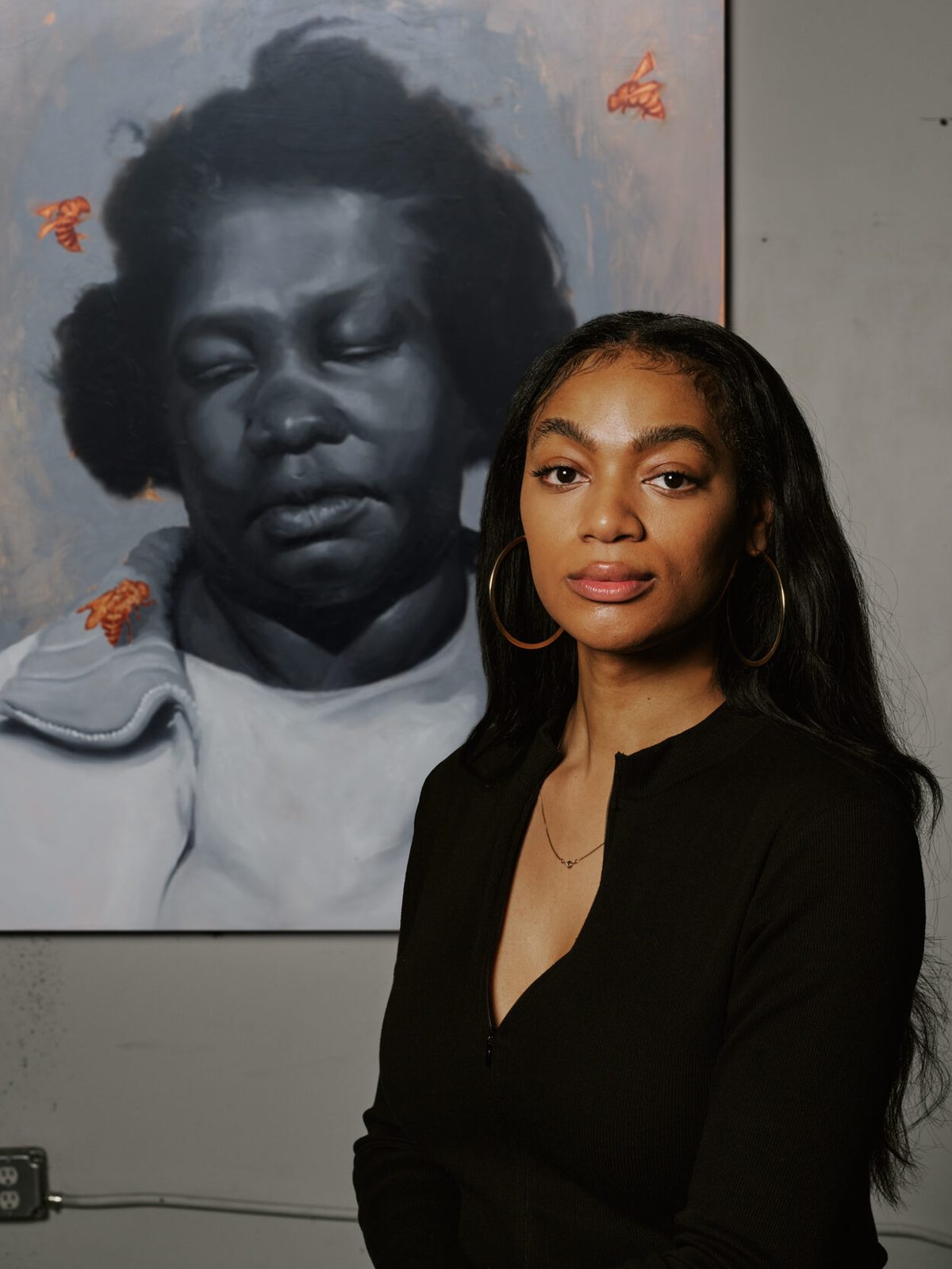
In that world, emotion didn’t have a seat at the table. Femininity didn’t have a room in the house. And yet, there I was: a small, tender, expressive boy who couldn’t help but cry at cartoons or get swept up in the drama of a good story. I was always a little too sensitive, a little too dreamy, a little too much.
My parents loved me, I believe, but they didn’t quite know what to do with me. Their world was built on structure, competition, and control. Vulnerability didn’t fit into their understanding of success. And so, I learned to keep my softness hidden. My femininity became a private rebellion, something I nurtured in secret.
That’s where art came in. It was the one place I didn’t have to explain myself. I could draw the girls I wasn’t allowed to be, paint the emotions I wasn’t allowed to show, create little portals to worlds where I felt whole. I didn’t call it “survival” back then, but that’s what it was. Telling stories through images was how I made sense of the world and how I carved out a space for myself inside it.
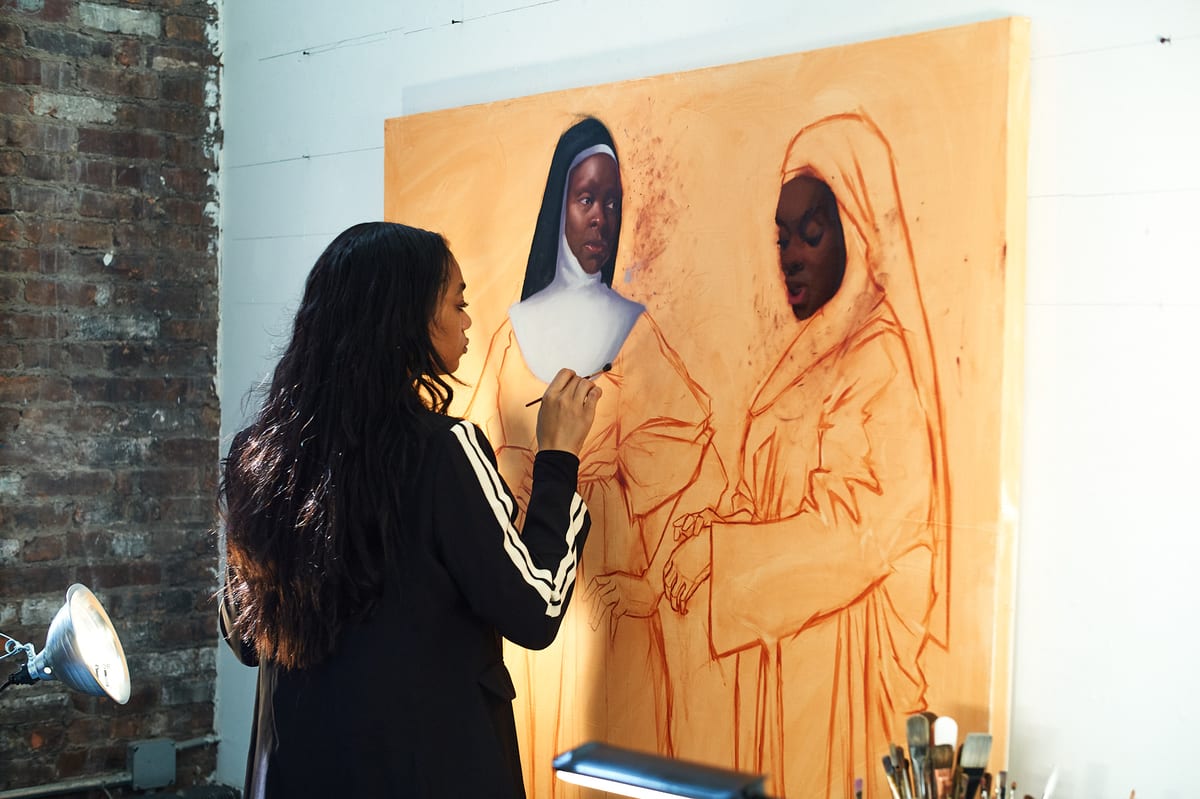
For years, I made art quietly. I didn’t show anyone the paintings of girlhood, the imagined landscapes, the emotional self-portraits tucked away in sketchbooks. I was afraid, of course, but I was also protecting something sacred. Those images were too honest, too raw, too close to the truth. They didn’t just challenge the rules of my household; they defied them.
But eventually, secrecy became too heavy to carry.
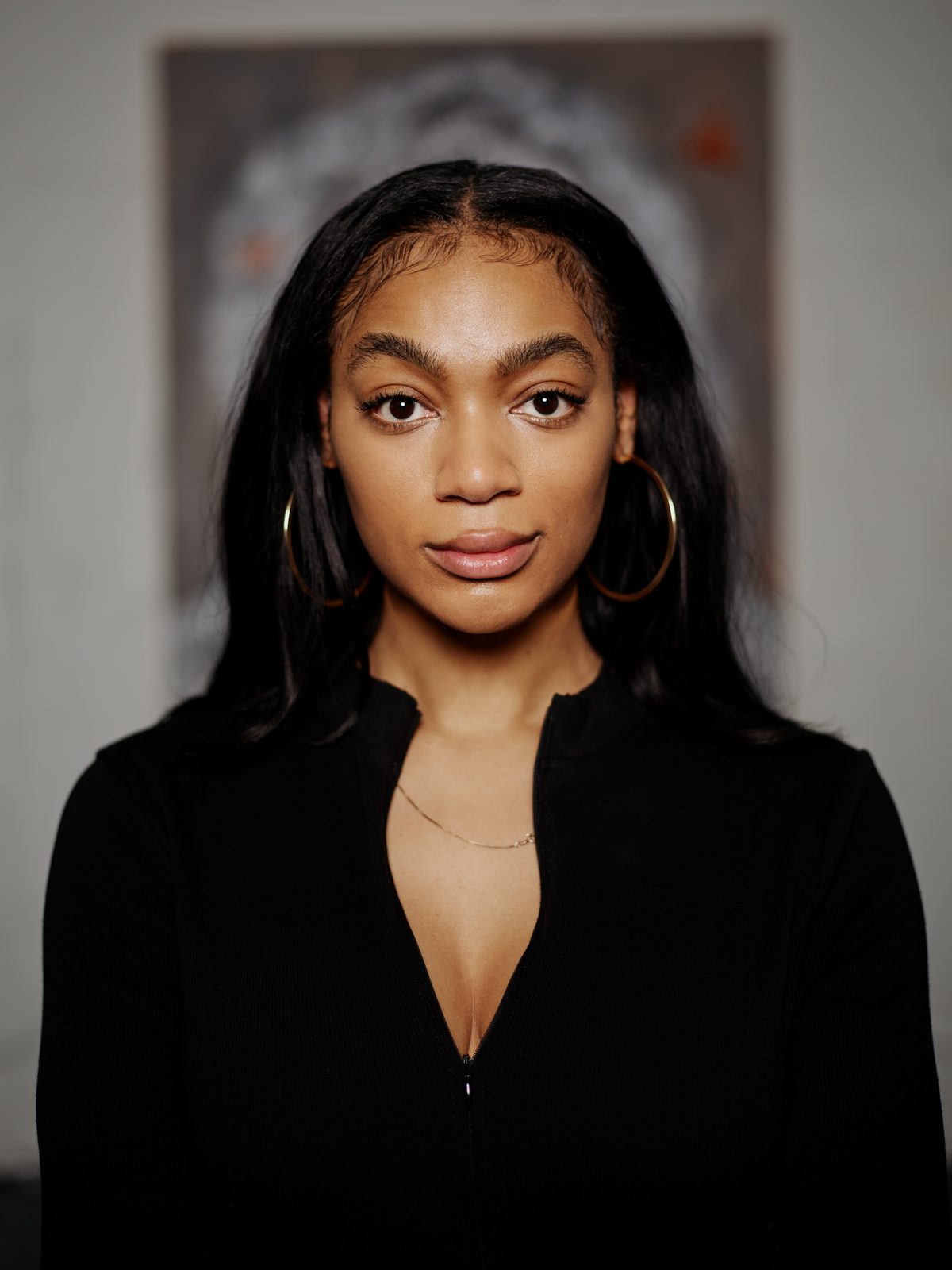
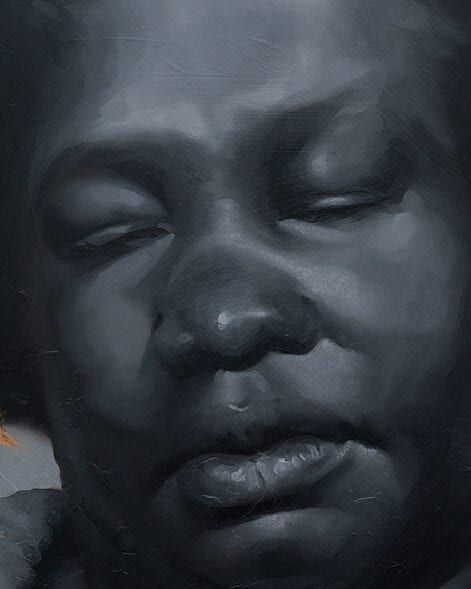
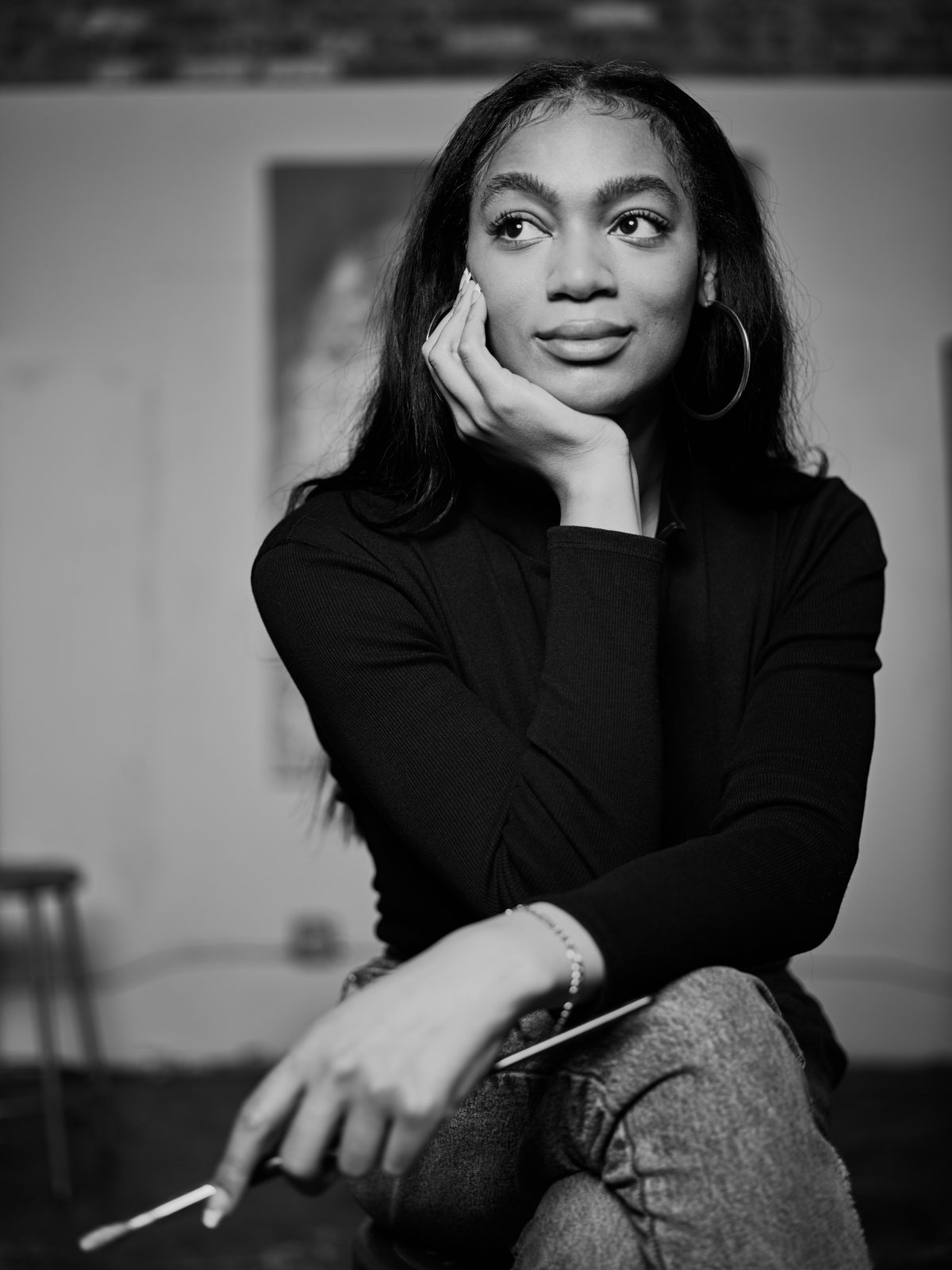
Now, I paint loudly. I take up space. I hang my work on walls and let it speak for itself. My paintings are not quiet anymore; they hum, they grieve, they celebrate, they insist. They say: “I am here. I was always here. You just didn’t know how to see me.”
When I paint, I think about the people who were never included in the official stories. The ones who were left out of the family albums, the museum walls, the history books. I paint them back into the frame. I give them light, color, and presence. I give them voice.
And in doing that, I give something back to myself.
My work is rooted in the language of Americana because I want to trouble its mythologies. I want to ask: what happens when someone like me holds the brush? What happens when we expand the idea of who gets to belong? Who gets to define “American,” and why has that definition been so narrow for so long?
The answers aren’t simple, but the act of asking is where the magic begins.
I still carry that little child inside me; the one who cried too easily, who felt too much, who made beauty out of whatever scraps she could find. But now, she’s not hiding. She’s painting. She’s telling stories with her whole chest. She’s rewriting the ending.
And she’s hanging it on the wall, in full color, for everyone to see.